


Harpes neograciles
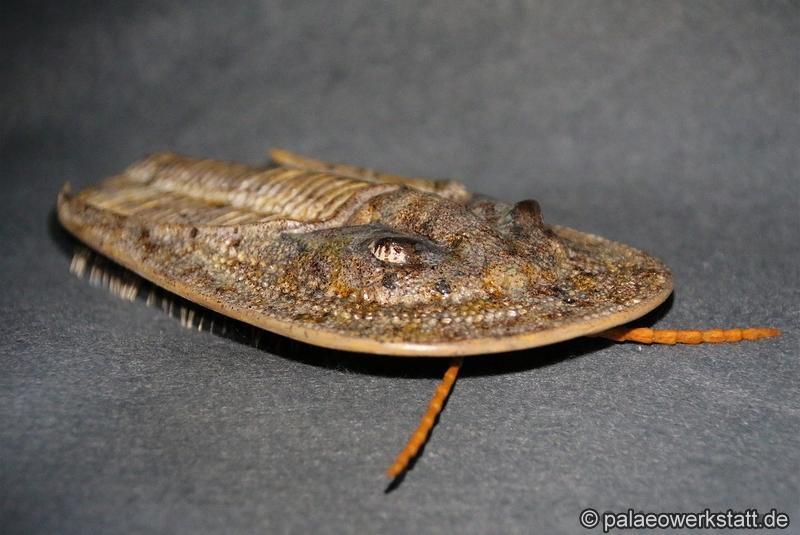
Description of the model:
The models are made of high quality epoxy resin and coloured using non-fade paint.
modelmaker: Susanne Klein
Dimensions
12 cm
Price
310,00 € without legs and tentacles
560,00 € with legs and tentacles
Our prices are quoted net and do not include packaging and freight.
Please respect our Conditions of delivery and payment.
Inquire about this model:
Model views Harpes neograciles
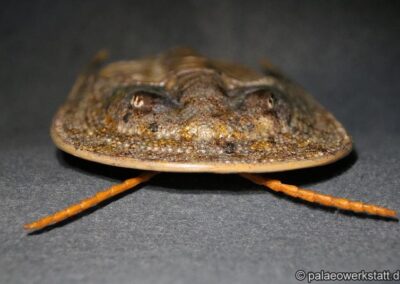
Harpes neograciles,
model of the Middle Devonian trilobit.
Close-up of the model in frontview with antennas
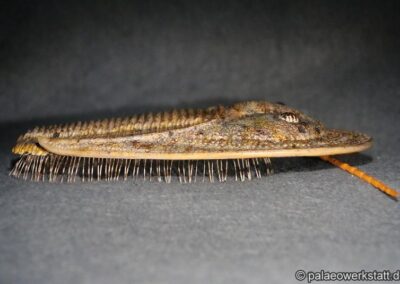
Harpes neograciles,
model of the Middle Devonian trilobit.
Version 1: complete with legs and antennas in R.H. side view
Version 2: just the body without legs and antennas
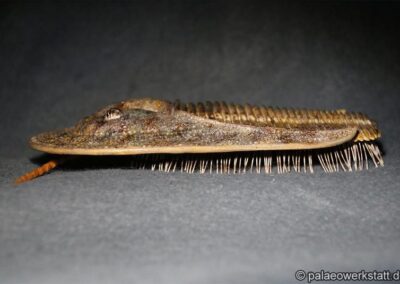
Harpes neograciles,
model of the Middle Devonian trilobit.
Version 1: complete with legs and antennas in L.H. side view
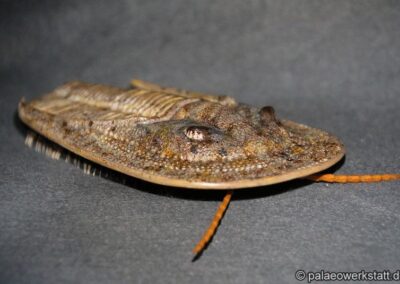
Harpes neograciles,
model of the Middle Devonian trilobit.
We offer two models:
Version 1: complete with legs and antennas
Version 2: just the body without legs and antennas
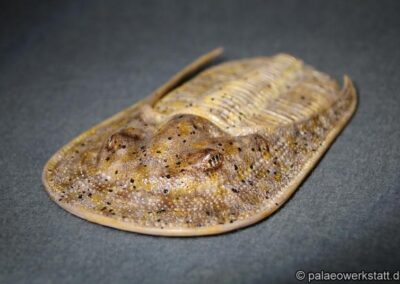
Harpes neograciles,
model of the Middle Devonian trilobit.
Version 2 of the model: just the body without legs and antennas
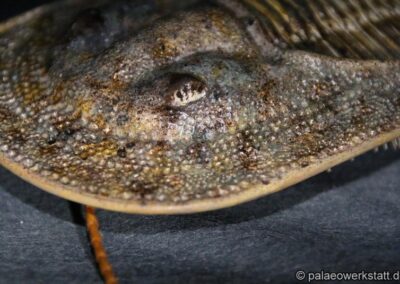
Harpes neograciles,
model of the Middle Devonian trilobit.
Close-up of the compound eye and the semicircular brim around the cephalon (head) which is often perforated by small pores. This brim is thought to serve as a filter-feeding apparatus
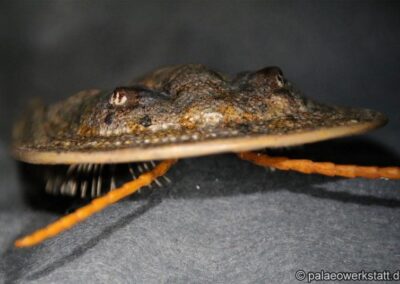
Harpes neograciles,
model of the Middle Devonian trilobit.
Close-up of the the model in front view
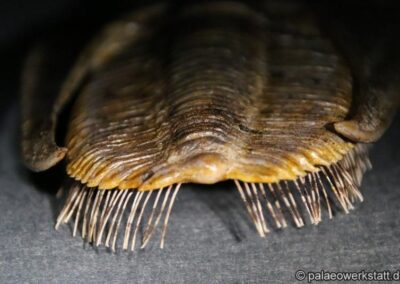
Harpes neograciles,
model of the Middle Devonian trilobit.
rear view with legs and the small pygidium.
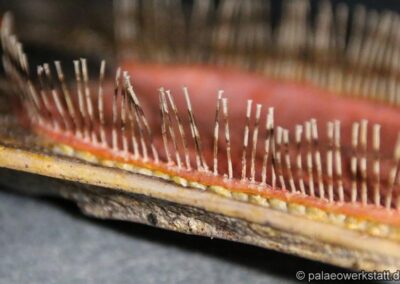
Harpes neograciles,
model of the Middle Devonian trilobit.
Close-up of the legs
Profile Harpes neograciles
Habitat
Trilobites were generally inhabitants of the seabed (benthos). Most fossils are from coastal (littoral) habitats, some also from mid-sea depths (shelf areas). Some lived in oxygen-poor, muddy sediments. Most trilobites probably fed as predators and/or scavengers. This is probably also the original way of life. The morphology of the genus Harpes shows evidence of a lifestyle as detritus/sediment eaters or filter feeders.
Geological era
Upper Devonian, Frasnium
Sources
Fossil finds are known from the Lower Harz, northern Sauerland, Kellerwald, Lahn-Dill area, Thuringia, Czechia, southern France
Further Informations
Harpida is one of the nine orders of the extinct arthropod class Trilobita. The first harpetid trilobites appear in the Upper Cambrian, and the last species die out at the end of the Devonian period.
Harpetid trilobites are characterized among trilobites by bearing a comparatively large, semicircular brim around the cephalon (head) which is often perforated by small pores. This brim is thought to serve as a filter-feeding apparatus. The brim stretches backward on either side of the cephalon (head) and typically has a pronounced suture along the outside.
The compound eyes are typically reduced to small tubercles, though they have strong ridges stretching to the glabella (central region of the cephalon). They also typically have 12 or more thoracic segments. The pygidia are usually small.
Reference for the text:
Fortey,Owens; Feeding habits in trilobites, Palaeontology 1999, Vol. 42, Part 3,( pp. 429-465)