


The incomplete fossilisation of Ice Age fossils, especially teeth and tusks, is not the only cause of damage to fossils over the years, in addition to inadequate storage. Historical varnishes, adhesives and techniques in particular are often responsible for additional damage. Unfortunately, these are rarely documented, so it is first necessary to analyse which conservation material we are dealing with in this case and which possible decay products also have an effect.
In the past, people liked to work with the ‘modern’ or available materials. Today we know better thanks to long-term experience.
What makes ice-age fossils so sensitive?
Fossil ivory is characterised by an incomplete decomposition of organic material and the partially newly deposited mineral components. Overall, we are talking about a very inhomogeneous preservation of the original subfossil material. Teeth in particular consist of different dental materials that have different proportions of organic and mineral components, such as dentin, for example, which contains a high proportion of water due to its high organic content, unlike enamel, which reacts less to changes in humidity due to its high mineral content. If these teeth are exposed to drying, these components shrink to varying degrees, which inevitably leads to stress cracks and even complete disintegration of the tooth.
Unlike fresh tooth material, the subfossil reacts unpredictably to severe drying and high humidity or water. Fossils that come to our lab have often been dried more or less slowly and gently like fresh ivory. What works with fresh ivory rarely works well with subfossil teeth. You can be lucky and nothing happens, but you run the risk of damage occurring later. It is important to ensure an even humidity of between 50-60% and to protect new finds from drying out immediately. (see also our article on ‘Subfossil fossils’). Nevertheless, there is no guarantee that this precautionary measure is sufficient.
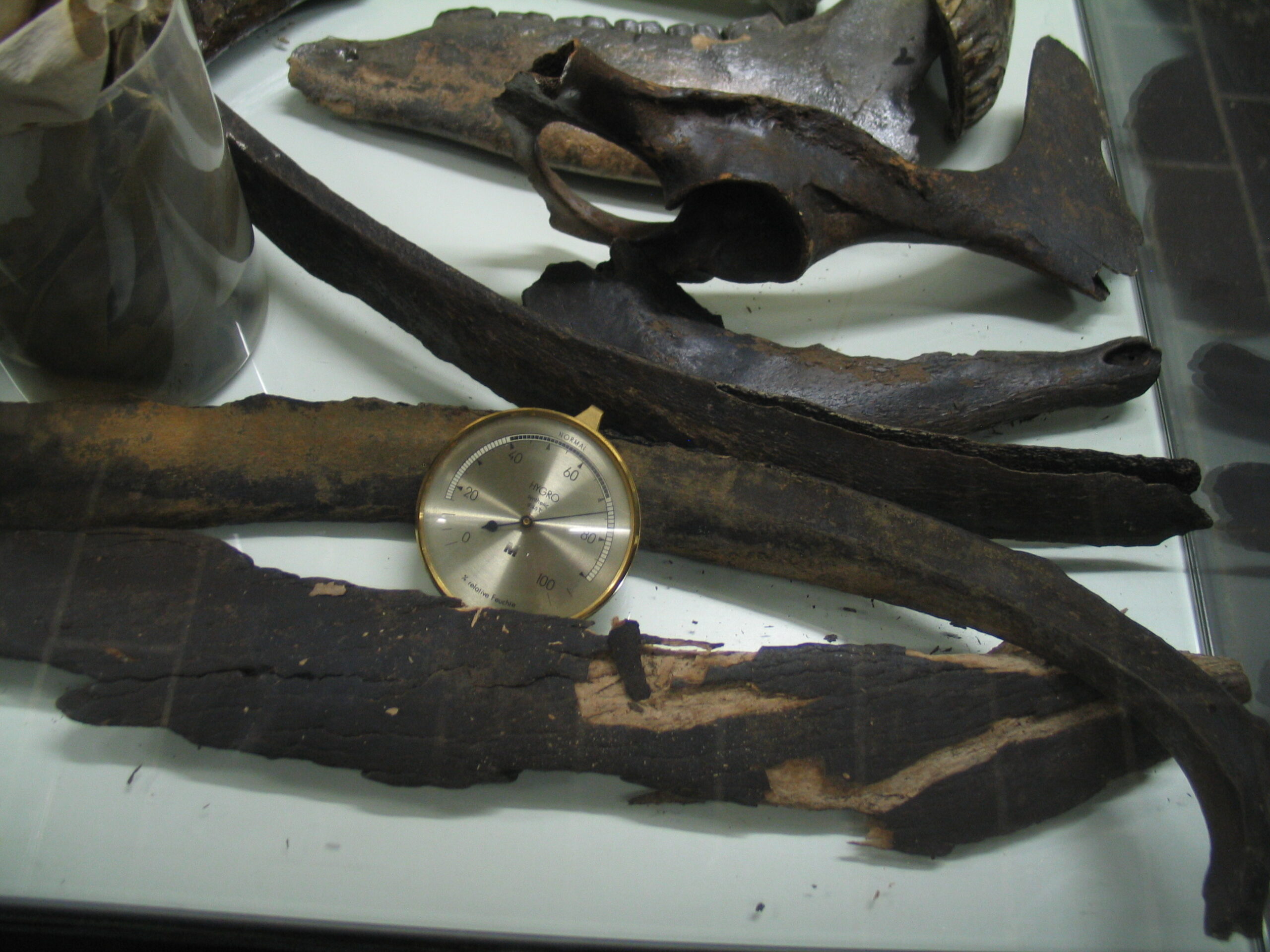
These fresh ice age bone finds should be dried slowly. This method has been proven to cause a lot of damage.
What would be the first steps to take?
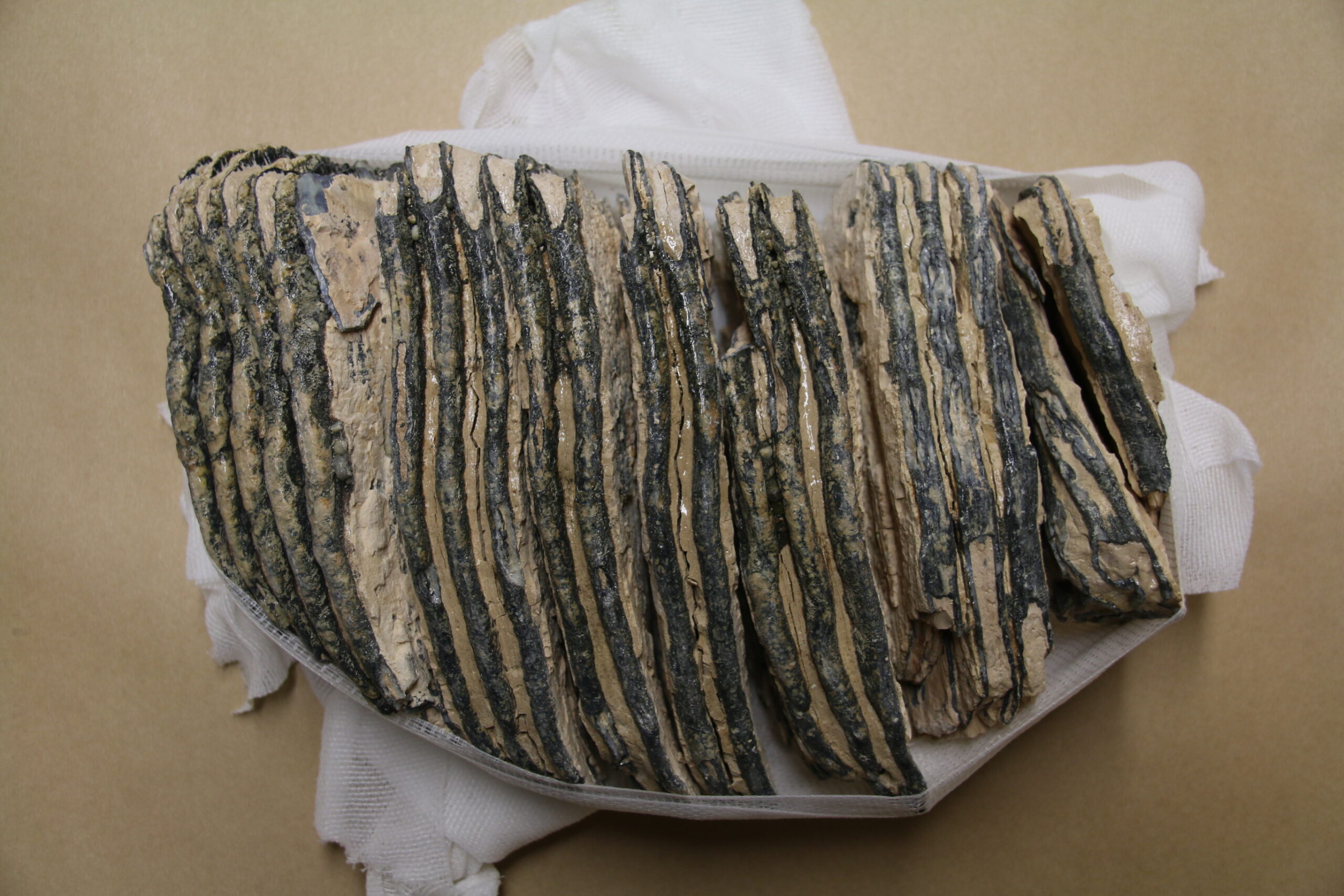
The different tooth materials shrink to different degrees when dried, which is why molars break up into segments.
We take a close look at the object. Has it already been treated or has it ‘only’ been dried?
Fossils that have already been treated:
Firstly, we try to remove old varnish. Shellac, for example: Very noticeable due to its usually honey-yellow, very shiny colour, it changes chemically over the years into a variant that can no longer be dissolved. It puts the surface of the original under tension because it does not react as flexibly to climatic changes as the tooth material. This leads to small cracks and flaking of the original material. To prevent further damage, the varnish is removed as far as possible, which also allows the natural colours of the fossil to reappear. I do not recommend varnishing again, but rather climate-controlled storage, i.e. as constant a humidity level as possible at 50-60% RH and a constant temperature. Above all, solar exposure or warm lighting should be avoided.
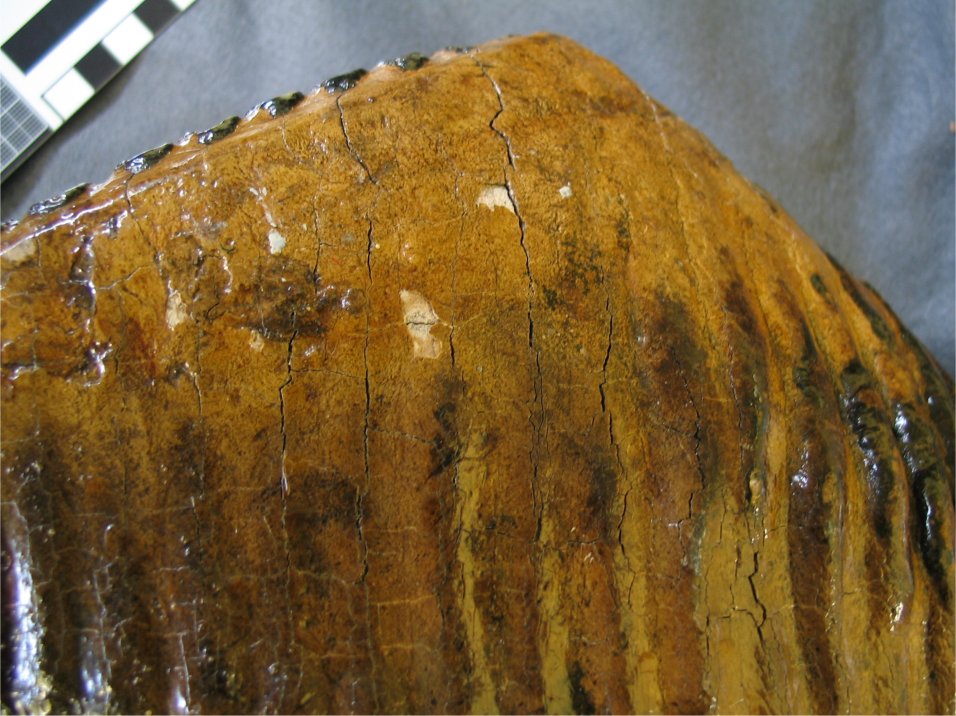
Damage to the surface of a mammoth molar caused by shellac varnish
Shellac was used for decades to coat fossils and is now responsible for many of the damages seen today.
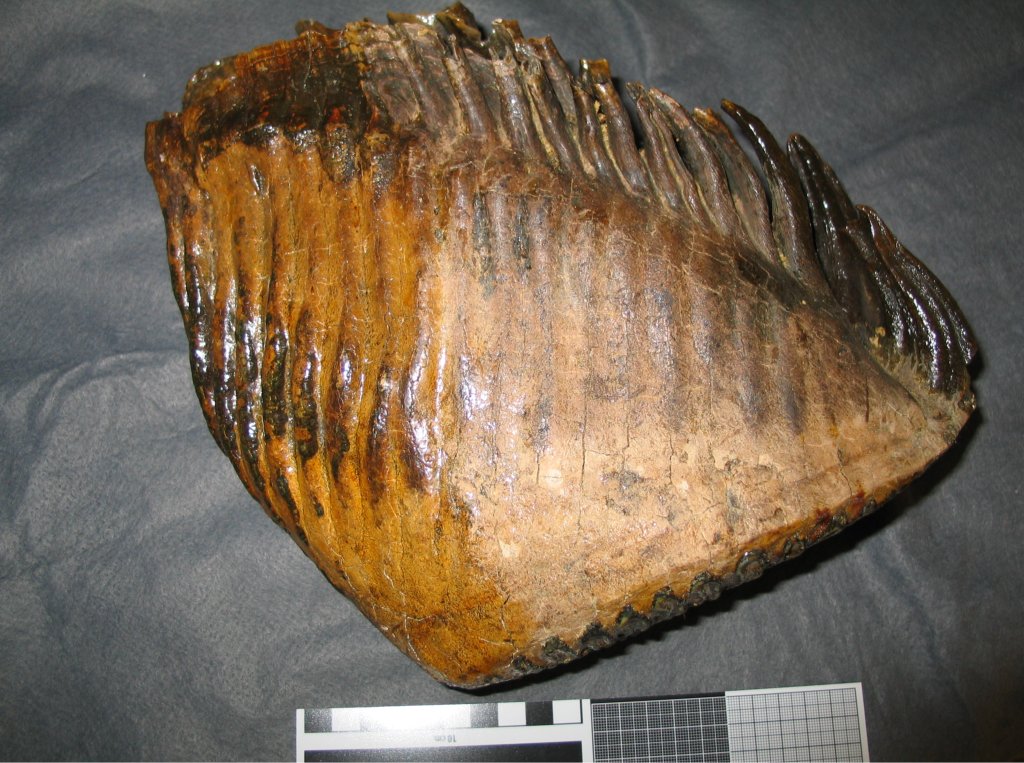
Mammoth molar during restoration
The glossy, honey-yellow shellac is being removed from the original. The original color of the mammoth molar is already visible again on the right side.
So what options are there for restoring mammoth molar pieces that are already showing signs of severe decay?
After the described cleaning of dust, old conservation materials and adhesives, you can often only see the true condition. How many additions may have been made? Depending on the material they are made of and their condition and quality, fillings may or may not be preserved. The molar has broken apart at the dentine layers and is severely deformed. The deformation can no longer be rectified, so that the individual fragments will no longer close without gaps when they are reassembled. In addition, the dentine layer is very brittle and crumbly due to numerous cracks, causing original material to break out.
The individual segments of the tooth are therefore cleaned of old varnishes and adhesives. After assembly, the segments are impregnated with plastic. Fine cracks and gaps between the segments are completely filled. The plastic strengthens the fossil, does not shrink and makes it fit for display again. The surface is not covered with plastic, but is left in its natural state
There are advantages and disadvantages to this method.
The disadvantage is that the plastic cannot be removed again. This method is therefore particularly recommended for dry, heavily damaged objects with a high weight.
The advantage: The fossil is stabilised. The fossil is less sensitive in the impregnated areas to further decay due to climatic fluctuations, as the plastic is able to absorb any stresses that arise without cracking again. This is a clear advantage over other methods, such as the treatment of paints, which demonstrably have no preservative effect, do not completely fill gaps and in some cases accelerate the decay of the fossil due to decomposition products and resulting stresses.
Despite the advanced treatment, ice-age fossils should always be stored in a climate-controlled environment.
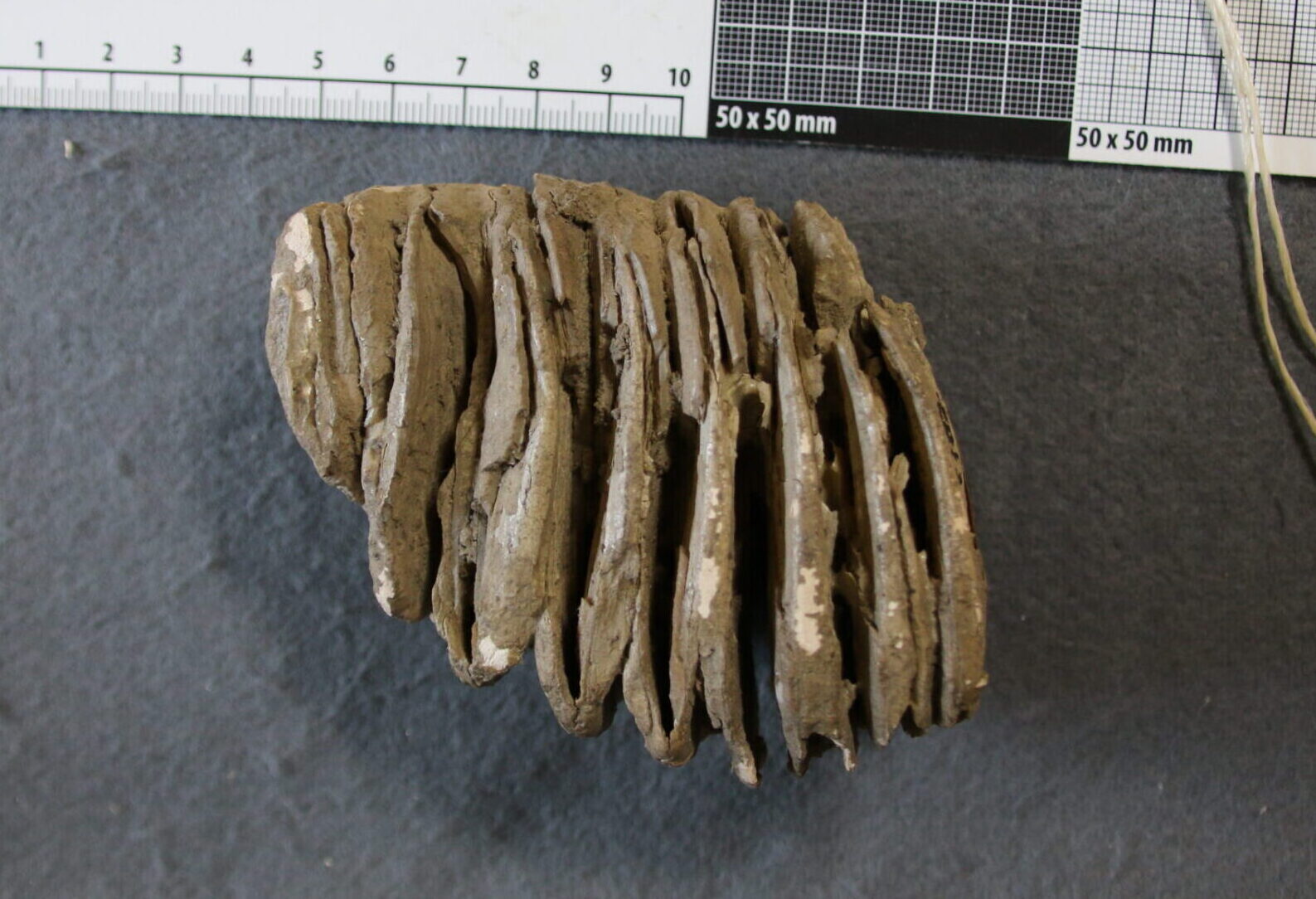
Mammoth molar before restoration
Old paint and glue are barely holding the severely deformed segments together.
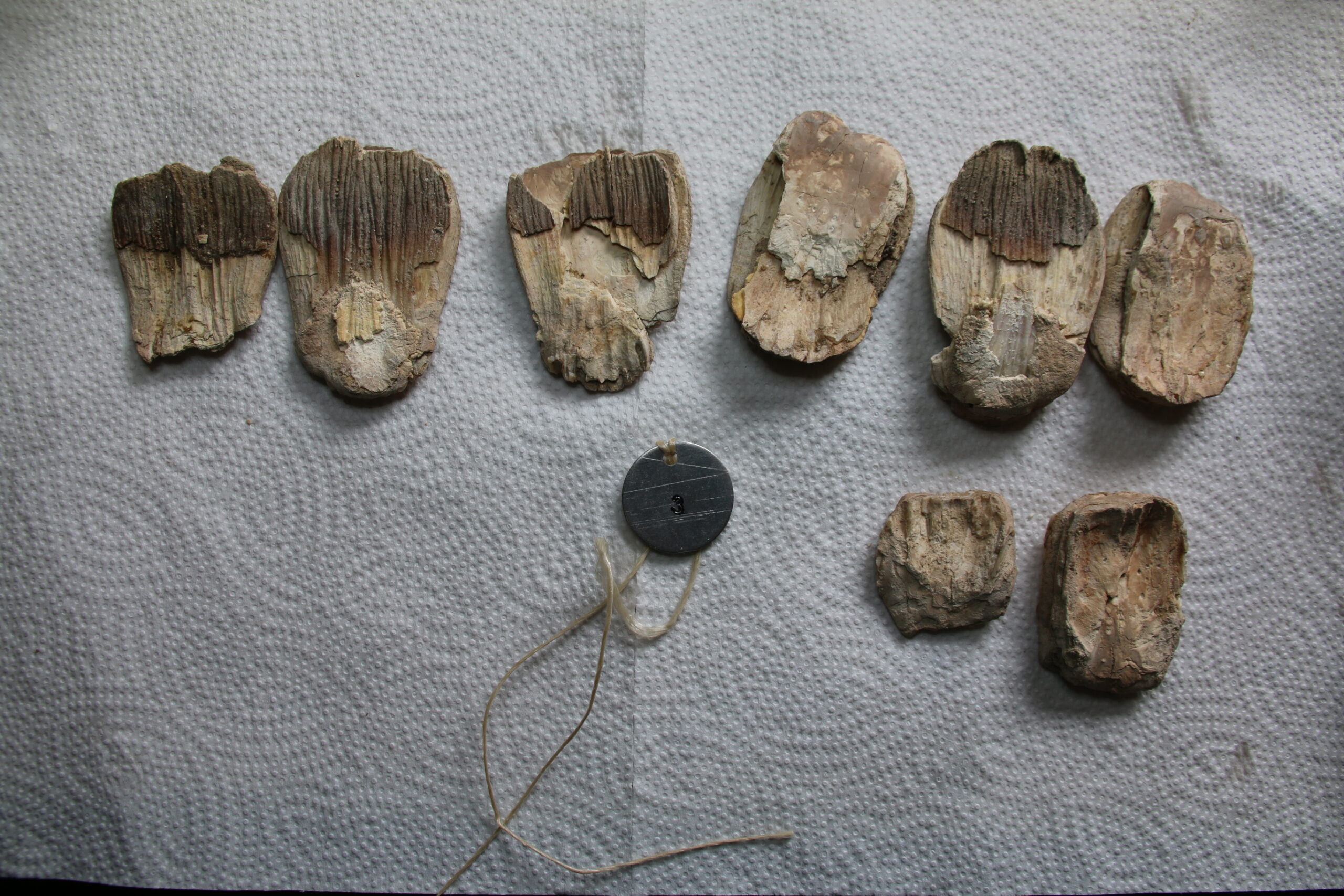
Mammoth molar after cleaning
Old adhesives and varnishes were removed, so the individual fragments of the mammoth molar now lie side by side.
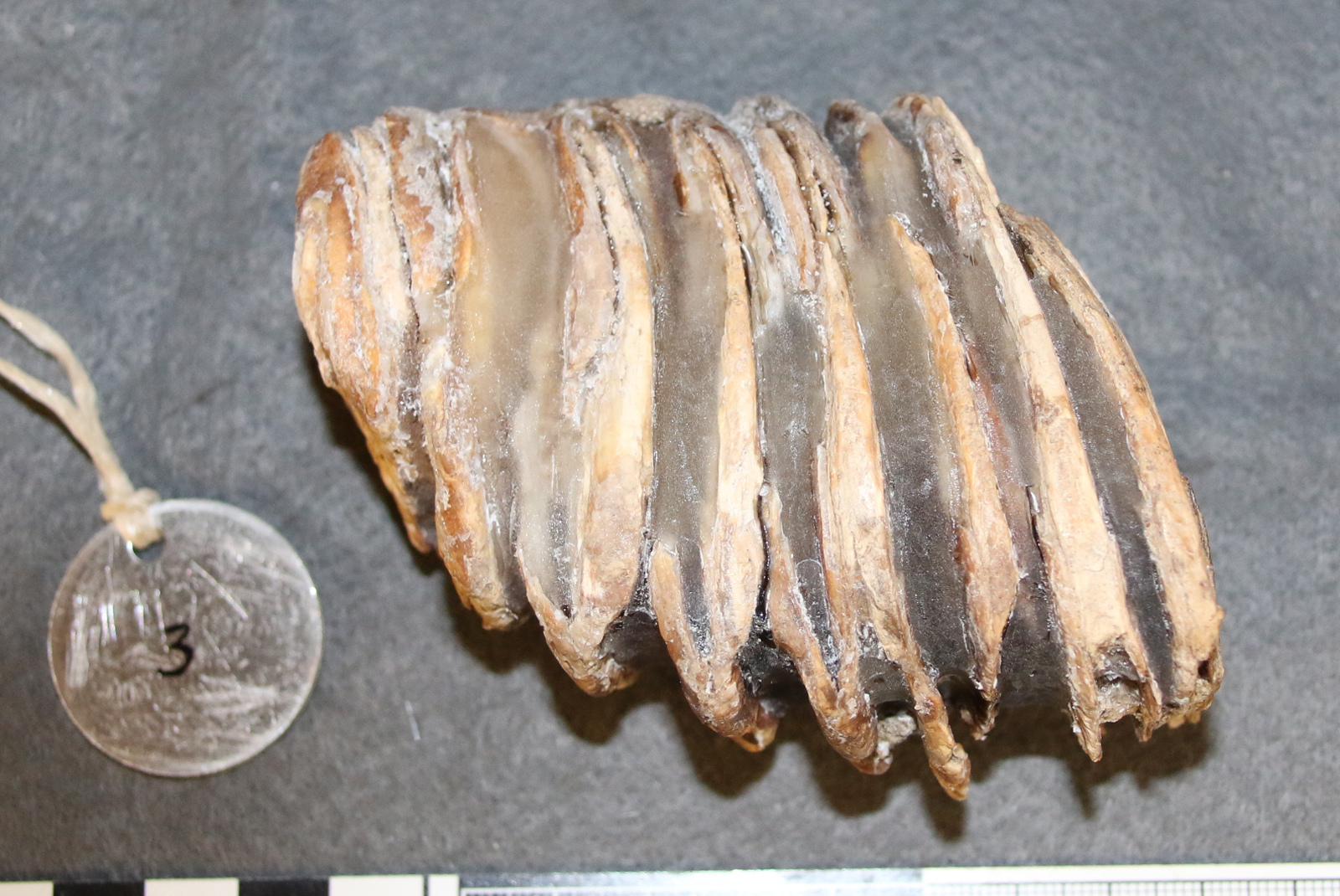
Mammoth molar after restoration
The mammoth molar is stabilized, the cavities are filled. Further fracturing is no longer possible.