


Viviparus viviparus
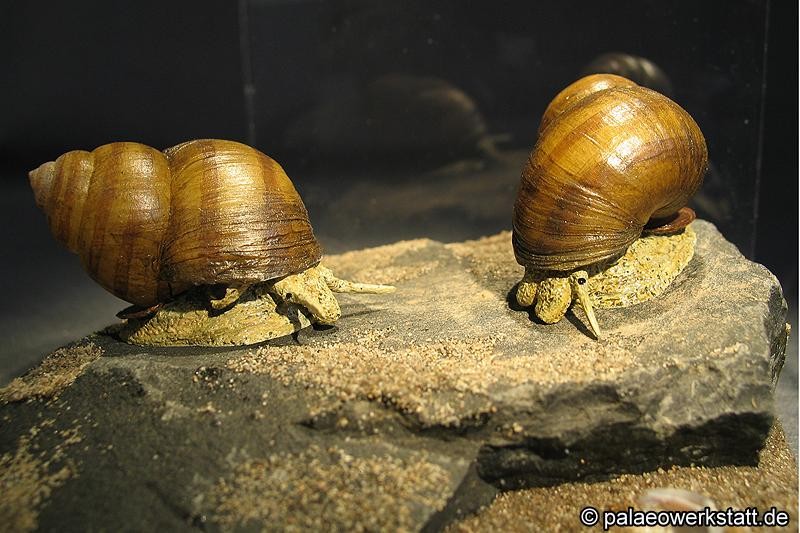
Description of the model:
Mud snails have separate sexes. The male mud snail’s right tentacle is modified to a copulation organ. The mud snail’s scientific name, Viviparus, is due to their bearing live young: Mud snails are ovoviviparous: Their young hatch from the eggs in the female’s body and are born alive.
We offer both sexes. The male mud snail has its right tentacle developed to a mating organ.
The models are made of high quality epoxy resin and coloured using non-fade paint and varnish.
Dimensions
body: 3,5 cm
height shell of the female: 39 mm
height shell of the male: 35 mm
Price
each 194,00 €
Our prices are quoted net and do not include packaging and freight.
Please respect our Conditions of delivery and payment.
Inquire about this model:
Model views Viviparus viviparus
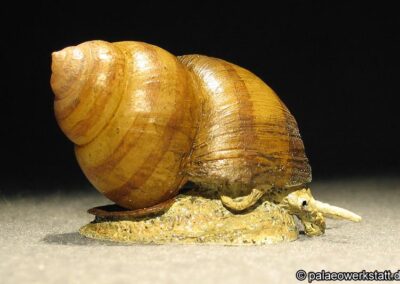
Viviparus viviparus - River Snail
R.H. side view of the female of the life-size model
-400x284.jpg)
Viviparus viviparus - River Snail
top view left: mail - right: female of the life-size model
-400x284.jpg)
Viviparus viviparus - River Snail
left: female-right: male of the life-size model
-400x284.jpg)
Viviparus viviparus - River Snail
R.H. side view of the male of the life-size model
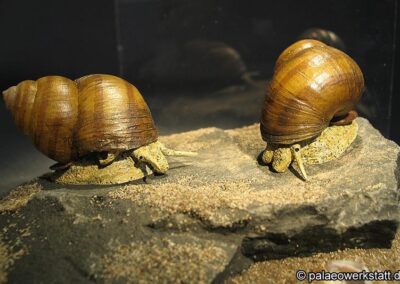
Viviparus viviparus - River Snail
left: female-right: male of the life-size model
Profile Viviparus viviparus
Habitat
In moving water, in lowland rivers and in the littoral of large lakes. (1)
In moderately moving water of larger streams and rivers, but also in canals, more rarely in lakes. It occurs not only on mud and sand substrates, but also on gravelly and stony soils in habitats with strong currents.
Sources
Widespread in Central and Eastern Europe as far as the Urals, in temperate and warm-temperate climates, but absent in the low mountain ranges and in the Alpine region.
Reference for the text:
(1) FALKNER, G. (1989): Der farbige Naturführer – Weichtiere. Lizenzausgabe mit Genehmigung der Mosaik Verlag GmbH, München für die Bertelsmann Club GmbH, Gütersloh. S. 118.