


Trypanosoma brucei gambiense
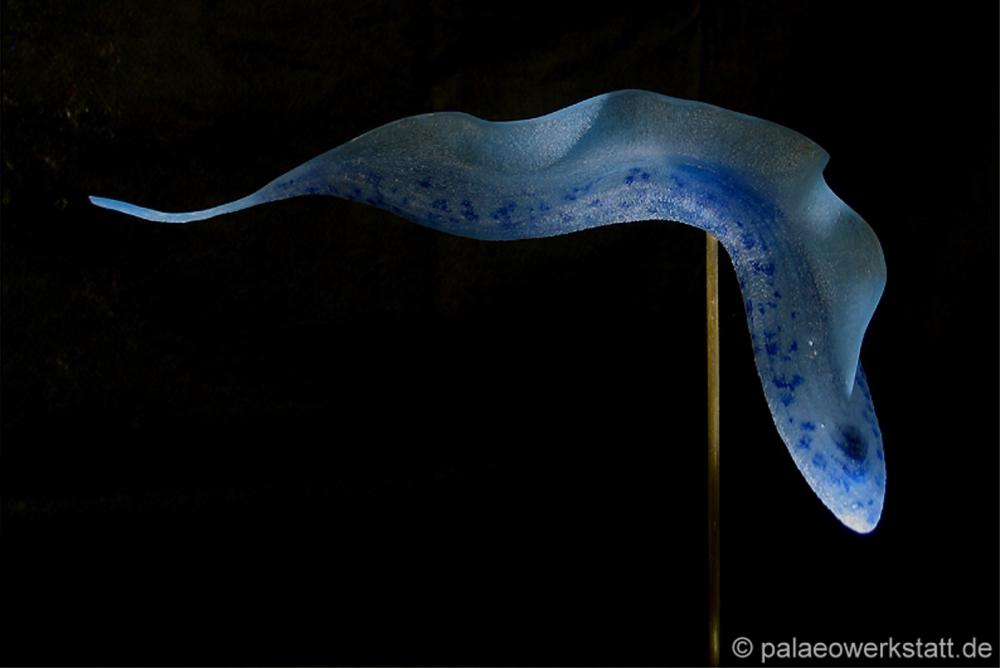
Description of the model:
The model shows the long slender trypomastigot with kinetoplast, nucleus with nucleolus, the undulating membrane and flagelum.
The model is made of translucent or coloured resin.
Dimensions
Length 30 cm
Price
640,00 €
Our prices are quoted net and do not include packaging and freight.
Please respect our Conditions of delivery and payment.
Inquire about this model:
Model views Trypanosoma brucei gambiense
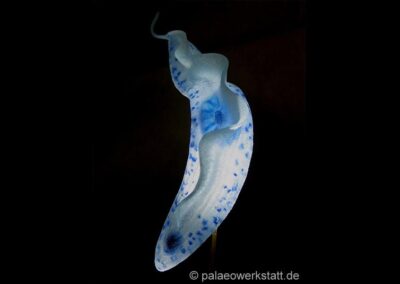
Trypanosoma brucei gambiense - parasit
In humans it causes African trypanosomiasis, or sleeping sickness.
The model shows the long slender trypomastigot with kinetoplast, nucleus with nucleolus, the undulating membrane and flagelum.
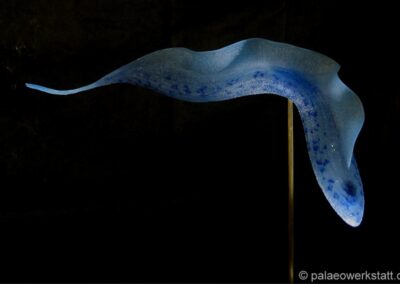
Trypanosoma brucei gambiense - parasit
In humans it causes African trypanosomiasis, or sleeping sickness.
The model shows the long slender trypomastigot with kinetoplast, nucleus with nucleolus, the undulating membrane and flagelum.
R.H.side view
Profile Trypanosoma brucei gambiense
Habitat
Trypanosoma brucei gambiense is a parasite that lives in various stages of development in the intermediate host of the tsetse fly as well as in the host (various mammal species, but especially humans).
Sources
Trypanosoma brucei gambiense causes African trypanosomiasis, known also as sleeping sickness in humans and nagana in other animals.
Further Informations
Infection occurs when a vector tsetse fly bites a mammalian host. The fly injects the metacyclic trypomastigotes into the skin tissue. The trypomastigotes enter the lymphatic system and into the bloodstream. The initial trypomastigotes are short and stumpy. Once inside the bloodstream, they grow into long and slender forms. Then, they multiply by binary fission. The daughter cells then become short and stumpy again. The long slender forms are able to penetrate the blood vessel endothelium and invade extravascular tissues, including the central nervous system (CNS)
The model shows the long and slender form which can move active between the blood cells.