


Myotis myotis
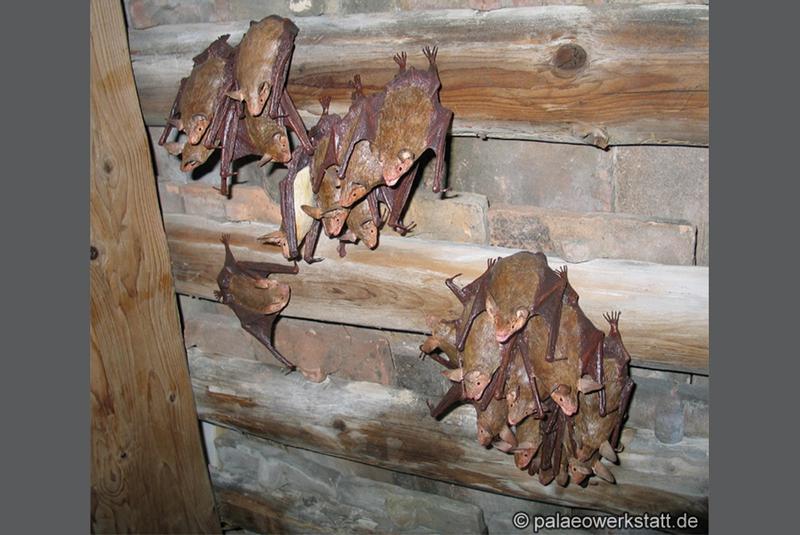
Description of the model:
The models are produced using high quality epoxy resin, reinforced with glassfibres. Eyes are made of glass.
They were coloured using non-fade paint and varnish. As a result they are protected from damage typical caused by insects and changing climate.
Modelmaker is Susanne Henssen.
Each animal is individually made in order to create unique groups according to your needs. Please tell us where the modelgroup shall be fixed.
Price
each 360,00 €
Our prices are quoted net and do not include packaging and freight.
Please respect our Conditions of delivery and payment.
Inquire about this model:
Model views Myotis myotis
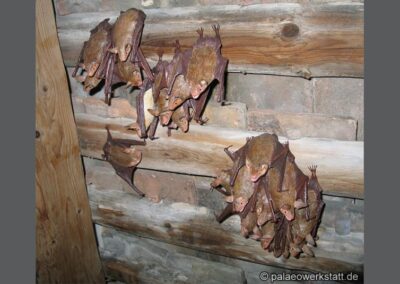
Myotis myotis - Greater Mouse-eared Bat
example: A cluster of 20 bats of the life-size models
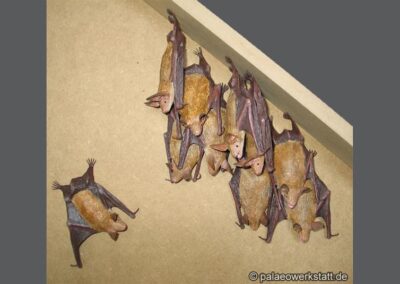
Myotis myotis - Greater Mouse-eared Bat
example: A cluster of 10 bats of the life-size models
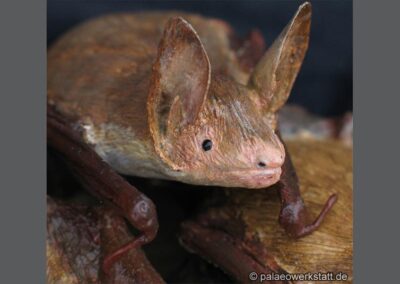
Myotis myotis - Greater Mouse-eared Bat
Close-up of a head with closed mouth of the life-size model
Myotis myotis - Greater Mouse-eared Bat
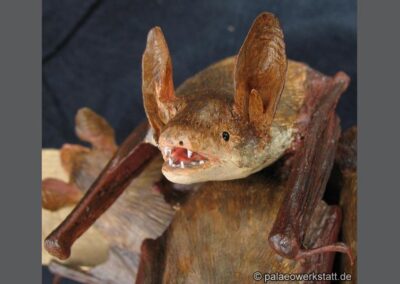
Close-up of a head with open mouth of the life-size model
Myotis myotis - Greater Mouse-eared Bat
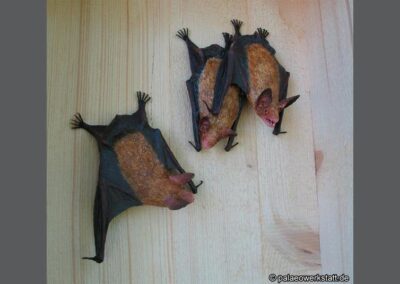
example: A cluster of 3 bats of the life-size models
Myotis myotis - Greater Mouse-eared Bat
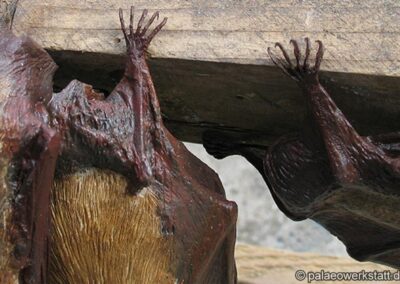
Close-up of the feet of the life-size model
Myotis myotis - Greater Mouse-eared Bat
Life-size models
example: A cluster of 3 bats in an offered bat box.
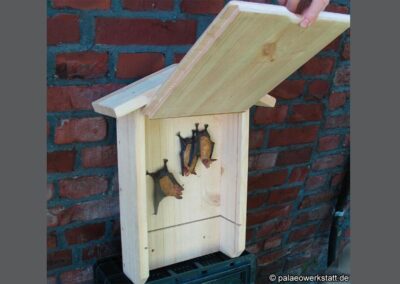
Myotis myotis - Greater Mouse-eared Bat
Life-size models example: A cluster of 3 bats in an offered bat box.
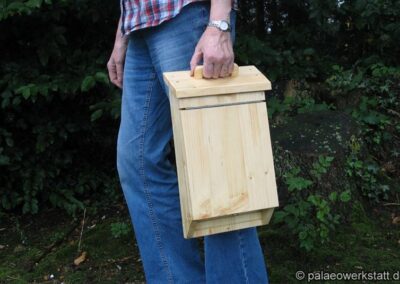
Myotis myotis - Greater Mouse-eared Bat
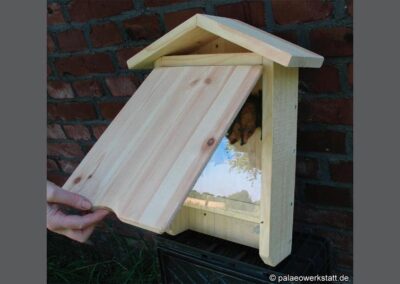
Life-size models example: A cluster of 3 bats in a portable offered bat box.
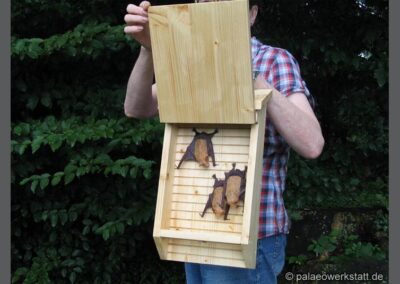
Myotis myotis - Greater Mouse-eared Bat
A cluster of 3 bats in a portable offered bat box. Very useful for nature guids.
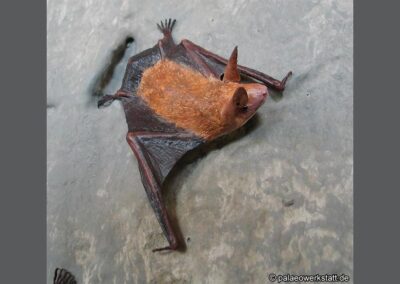
Myotis myotis - Greater Mouse-eared Bat Life-size model
Profile Myotis myotis
Habitat
It forages over woodland edge, open woodland and pasture. It preys on large insects, mainly beetles and crickets, gleaned from the ground, also feeds on spiders. It roosts in underground sites all year in much of range, and in buildings (loft-spaces) in summer in northern parts. Occasionally it forms small colonies in trees. It is an occasional migrant; the longest recorded movement is 436 km (Simon et al. 2004).
Sources
Myotis myotis is a western Palaearctic species; it occurs in western, central and southern Europe (with individual records from southern England and southern Sweden) and in Asia Minor and in the Levant.
Further Informations
The Greater Mouse-Eared Bat is highly protected.
Because the models are artifical, the Conventions on International Trade in Endangered Species of Wild Fauna and Flora do not apply, there is no permit required.