

Horridonia horrida
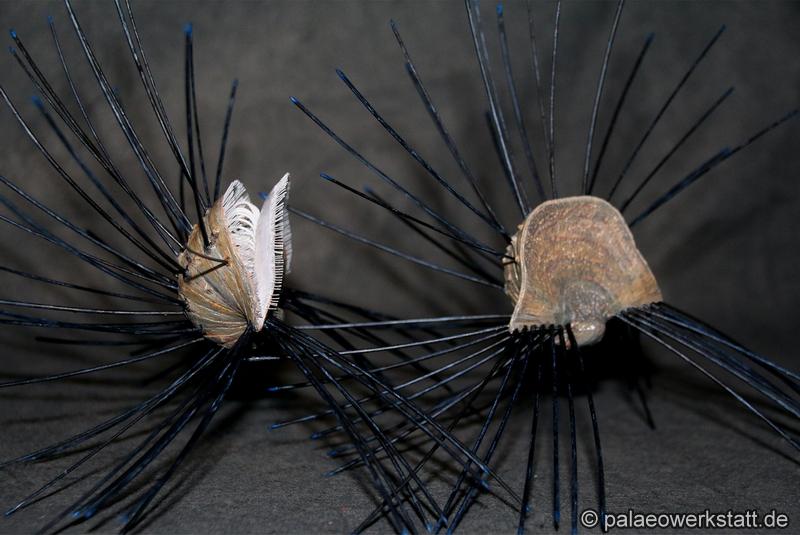
Description of the model:
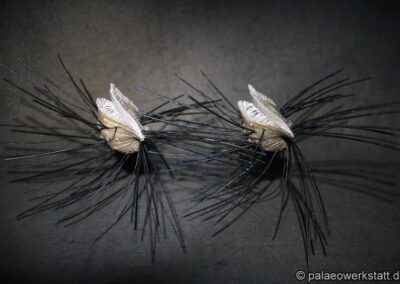
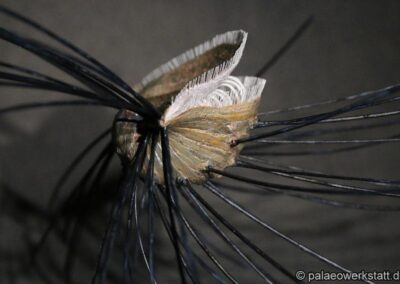
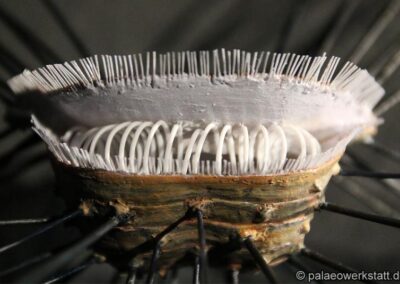
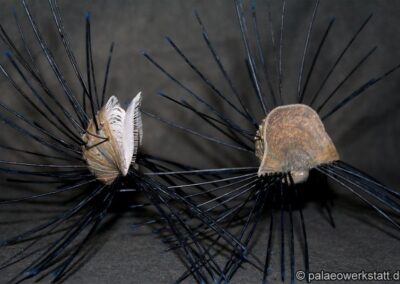
We offer two models one with closes and one with open valves. The model with open valves shows the lophophore, a crown of tentacles whose fine hairs create a water current that enables them to filter food particles out of the water.
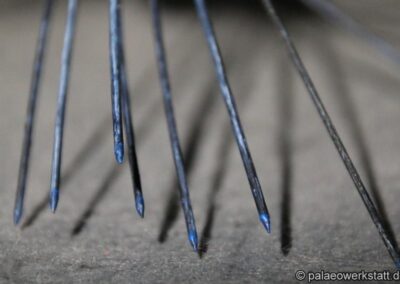
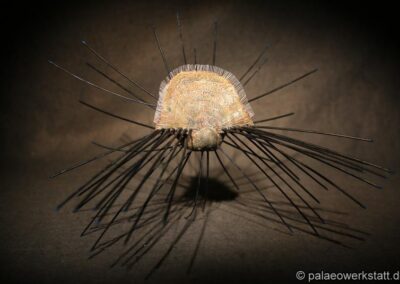
The models were cast using high quality epoxy resin and were coloured using non-fade paint and varnish. The spines are made of flexible plastic, except a few which are made of stainless steel. The tips of the spines are flourescing blue by black light.
Dimensions
width of the cardinal area: 6 cm
space requirement with spines about 23 x 17 x 12 cm
Price
1 model with closed valves: 452,00 €
1 model with open valves: 609,00 €
Our prices are quoted net and do not include packaging and freight.
Please respect our Conditions of delivery and payment.
Inquire about this model:
Model views Horridonia horrida
Horridonia horrida
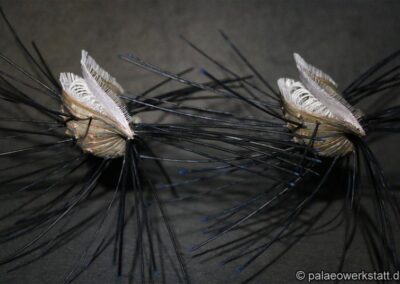
Life-size model of the Permian brachiopod.
Horridonia horrida
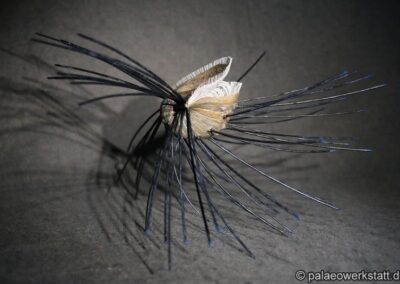
Life-size reconstruction, R.H. side view of the model with open valves. The spines protect the specimen from sinking in soft sediment and fixing it.
Horridonia horrida
Life size reconstruction of the extinct brachiopod made of plastic
Horridonia horrida
Life-size reconstruction, Close-up of the model with open valves. The brachiopod filters food out of the sea.
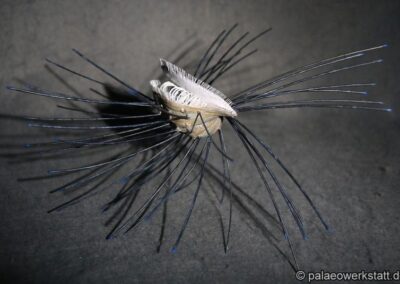
Horridonia horrida bufoninus, Life-size reconstruction,
the Permian brachiopod has lots of long spines
Horridonia horrida
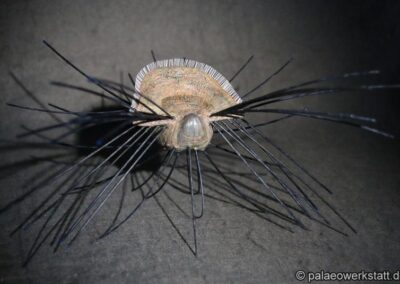
Life-size reconstruction of the brachiopod , back side view
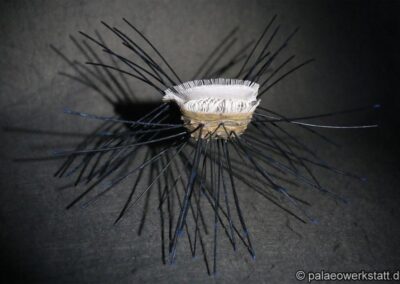
Horridonia horrida
Life-size reconstruction of the brachiopod with open valves.
Front view
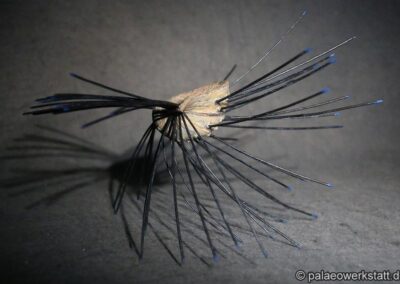
Horridonia horrida
Life-size reconstruction of the brachiopod in a natural position
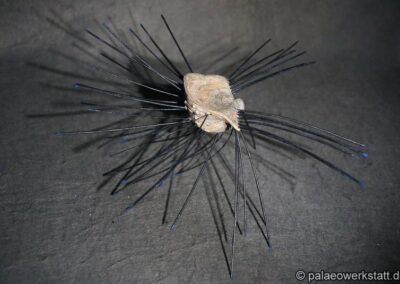
Horridonia horrida
Life-size reconstruction of the brachiopod in natural position
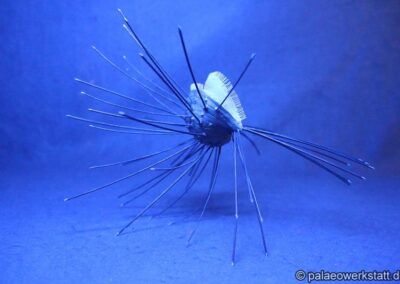
Horridonia horrida
Life-size reconstruction of the brachiopod with open valves.
L.H. side view of the model The tips of the spines are flourescing blue by black light.
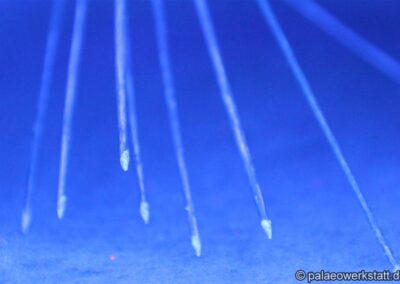
Horridonia horrida
Life-size reconstruction. Close-up of the tip of the spines which flourescing blue by black light.
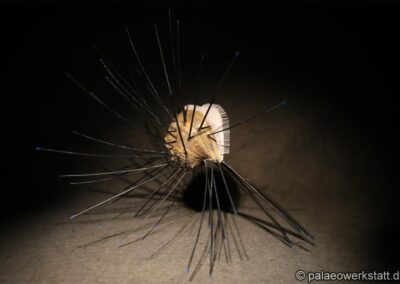
Horridonia horrida
L.H. side view of the Life-size reconstruction with open valves.
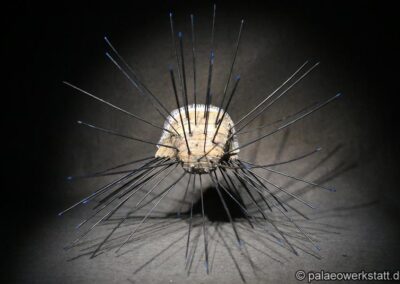
Horridonia horrida
Bottomside of the brachiopod Life-size reconstruction with open valves
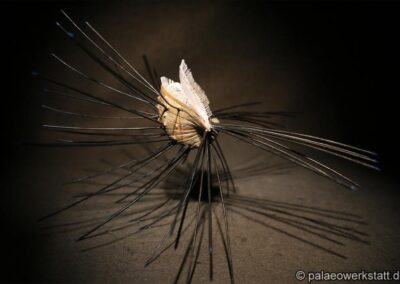
Horridonia horrida
Life-size reconstruction of the brachiopod with open valves.
R.H. side of the model
Horridonia horrida
Life-size reconstruction. View in the open brachiopod. Conspicuous is the coiled lophophore and the fine hairs which are used for respiration and filtration.
Horridonia horrida
Life-size reconstruction. Close-up of the tip of the spines.
Horridonia horrida
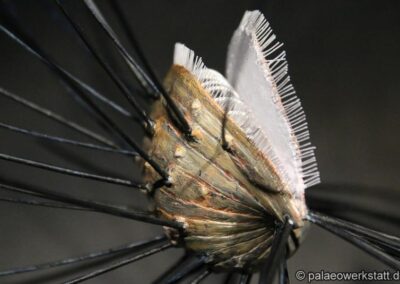
Life-size reconstruction of the brachiopod.
L.H. side view of the open valves .
Horridonia horrida
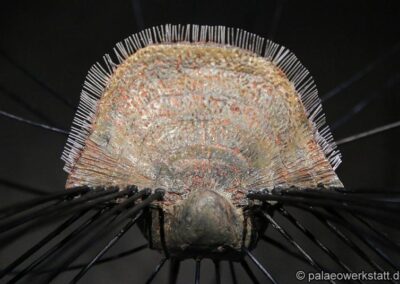
Life-size reconstruction of the brachiopod with open valves.
Close-up of the brachial side
Horridonia horrida
Life-size reconstruction of the brachiopod.
top view of the model with open valves.
Horridonia horrida,
Life-size reconstruction of the brachiopod from the Upper Permian (Zechstein) shows many of long spines. We offer two models. One with open valves and one closed
Horridonia horrida
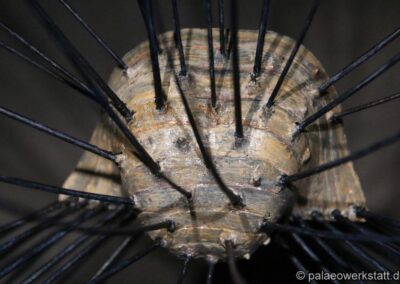
Life-size reconstruction of the brachiopod.
Close-up of the pedicle valves.
Profile Horridonia horrida
Geological era
Upper Ordovician – Upper Permian
Further Informations
Productida existed since the late Ordovician 460 Million years ago. Horridonia horrida is a brachiopod which disappeared in the Upper Permian about 245 Million years ago.
Like other brachiopods Horridonia horrida has two valves (shell sections) which cover the surface of the animal. The valves are termed pedicle and brachial. The pedicle valve is typically larger than the brachial. When the valves are open the lophophore can been seen in the pedicle valve, used for respiration and filtering food out of the water. Horridonia horrida shows a lot of spines especially at its pedicle valve, while at the brachial valve are just spines at its cardinal area. Different to other brachiopods Horridonia has no stalk-like pedicle like most brachiopods have for attaching themselves to the substrate. The spines were obviously needed to protect the specimen from sinking in soft sediment and fixing it. Horridonia seems to live partially below the sediment-water interface but protruding above it.
There are 6 subspecies known of Horridonia horrida which are important as key fossils in the late Permian (Zechstein). We based our model on fossils of Horridonia horrida bufoninus which were collected by Wolfgang Munk.
Referencing address:
C. Kurz: Naturmuseum im Ottoneum Kassel