


Myothis daubentoni
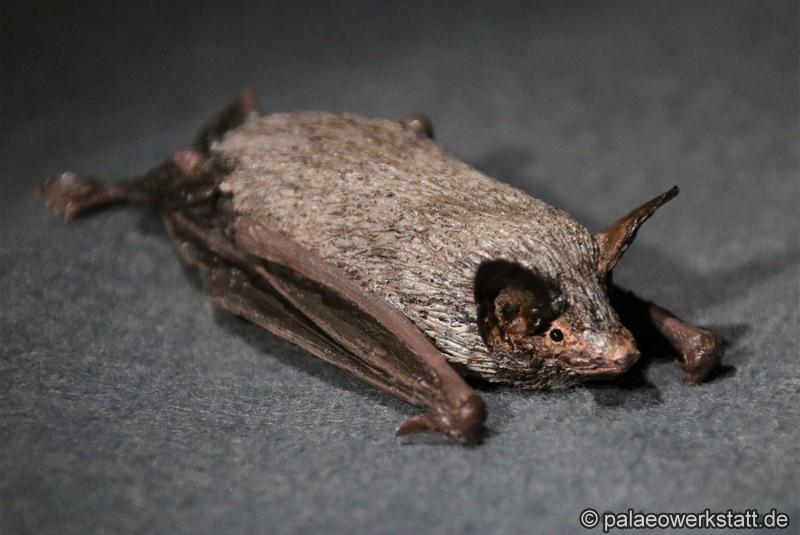
Description of the model:
During hunting breaks, they rest hanging from walls or branches.
The model was made by Susanne Klein.
The cast is produced using high quality epoxy resin. Eyes are made of glass.
The models were coloured using UV-resistant acrylic paint and varnish.
Price
380,00 €
Our prices are quoted net and do not include packaging and freight.
Please respect our Conditions of delivery and payment.
Inquire about this model:
Model views Myothis daubentoni
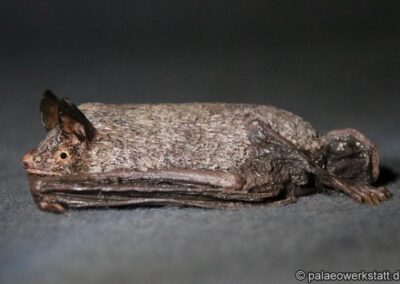
Myotis daubentoni,
Daubenton's bat
life-size model L.H.side view
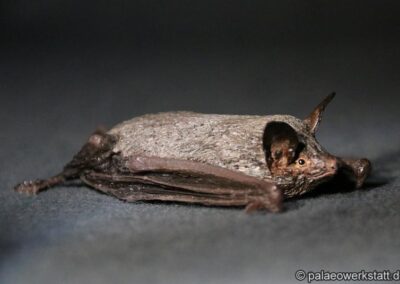
Myotis daubentoni,
Daubenton's bat
life-size model
R.H.side view
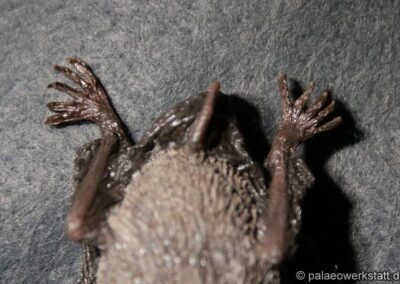
Myotis daubentoni,
Daubenton's bat
life-size model
Close-up of the feet
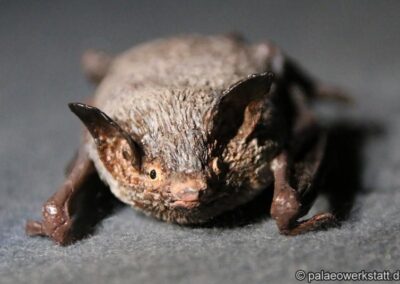
Myotis daubentoni,
Daubenton's bat
life-size model.
Close-up of the head
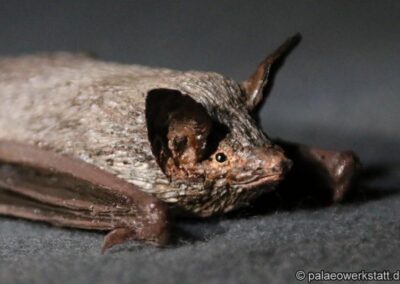
Myotis daubentoni,
Daubenton's bat
life-size model.
Close-up of the head
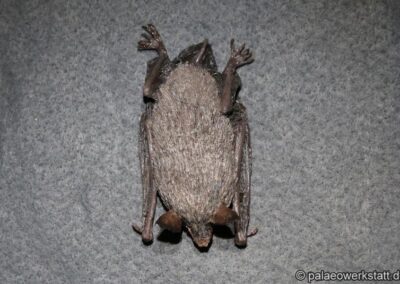
Myotis daubentoni,
Daubenton's bat
life-size model
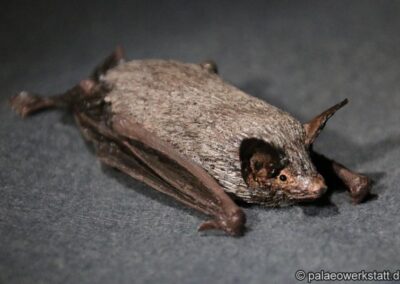
Myotis daubentoni,
Daubenton's bat
life-size model
Profile Myothis daubentoni
Habitat
The water bat prefers water-rich landscapes, but occasionally it can also be found far away in forests or towns. It has its nursery roosts in tree hollows, nesting boxes, in narrow crevices under roofs, behind window shutters and in cracks in walls. Males also roost under bridges in rock crevices. It hibernates in caves, tunnels, bridge cavities, sewers and other underground facilities. There it hangs freely or hides in cracks, but also hides in rubble.
Sources
Throughout Europe, with the exception of northern Scandinavia and south-eastern Europe. In the east to Siberia, Kamchatka, Sakhalin, China and Japan. Assam (India).
Reference for the text:
GEBHARD, J. (1997): Fledermäuse. Birkhäuser Verlag, Basel. ISBN 3-7643-5734-7