


Crataegus monogyna
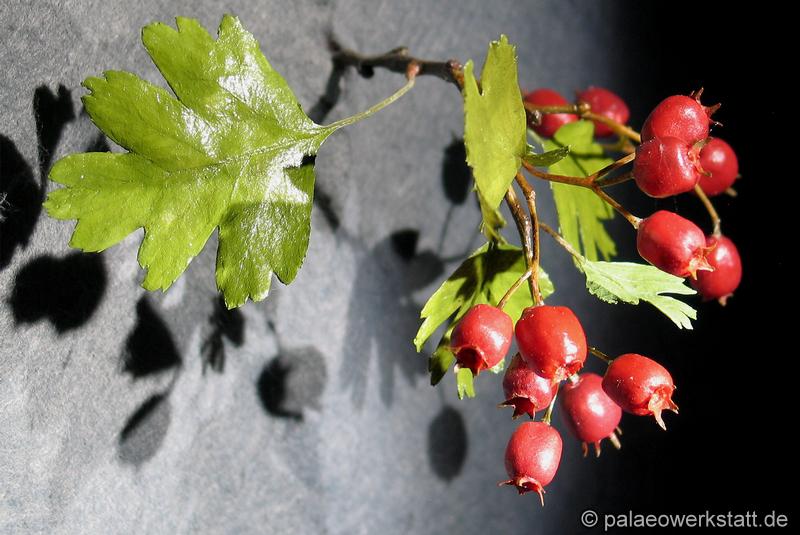
Description of the model:
The model shows a branch with several leaves and 15 fruits.
The model is made of high quality epoxy resin and was hand-coloured using non-fade paint and varnish.
Dimensions
12 x 16 x 7,5 cm (LxWxH)
Price
630,00 €
Our prices are quoted net and do not include packaging and freight.
Please respect our Conditions of delivery and payment.
Inquire about this model:
Model views Crataegus monogyna
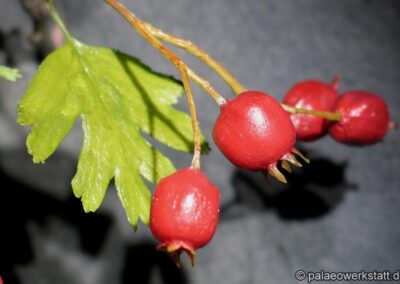
Crataegus monogyna - Common hawthorn
close-up of the life-size model
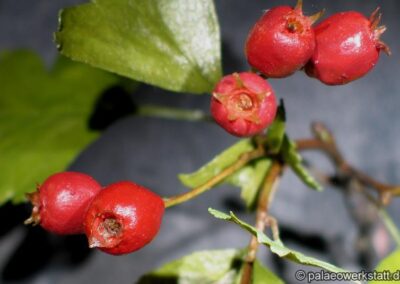
Crataegus monogyna - Common hawthorn
close-up of the life-size model
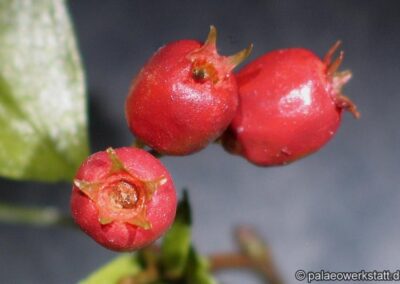
Crataegus monogyna - Common hawthorn
close-up of the life-size model
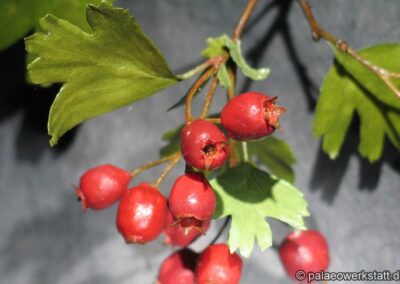
Crataegus monogyna - Common hawthorn
life-size model
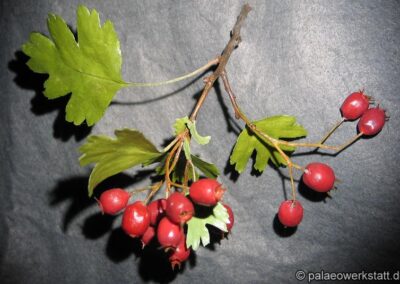
Crataegus monogyna- Common hawthorn
life-size model
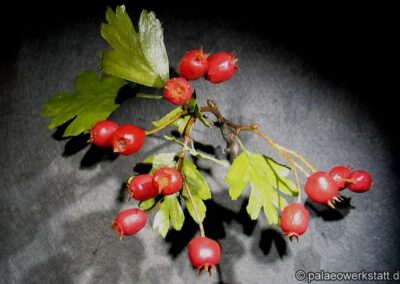
Crataegus monogyna - Common hawthorn
life-size model
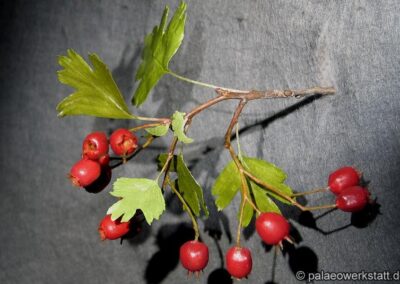
Crataegus monogyna- Common hawthorn
life-size model
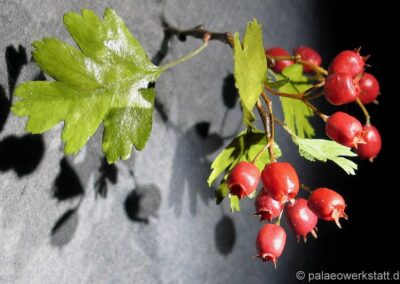
Crataegus monogyna - Common hawthorn
life-size model
Profile Crataegus monogyna
Sources
This light to semi-shady plant grows in deciduous and mixed forests, on forest edges, hedges, copses and rocky slopes on dry to fresh soils. The hawthorn is soil-tolerant, preferring calcareous, loamy soils, but cannot tolerate salty soils. It can be found almost everywhere in Europe, as well as in north-west Africa and western Asia. The single-stemmed hawthorn is frequently planted.
Further Informations
Haws are important for wildlife in winter, particularly thrushes and waxwings; these birds eat the haws and disperse the seeds in their droppings.
It is also called may, mayblossom, maythorn, quickthorn, whitethorn, motherdie and haw
Referencing address:
Museum Solthurn, CH