Fossil preparation
Would you like to have your fossils professionally preserved or restored?
Please send us photos of different views with the dimensions and describe the condition of the object and your requirements as far as possible. I will be happy to make you an offer.
It is best to find out immediately about the necessary conservation of your fresh find. As soon as it has been removed from the medium that has protected it from decay for thousands of years, the decay can begin. I will be happy to advise you.
In the past, historical artefacts were often subjected to various conservation treatments which, as we can see today, do more harm than good. We analyse the condition and restore the fossil. This involves removing old preservatives as far as possible and stabilising the fossil.
Preservation of fossils
Not all finds need to be preserved. However, there are preservation conditions that make long-term conservation necessary.
We have specialised in the conservation of Ice Age fossils.
Preservation with polyethylene glycol
When preserving with PEG, the water contained in the fossil is replaced by the waxy PEG over a longer process. This prevents damage caused by shrinkage during drying, for example.
It is important to secure the find as quickly as possible and store it in a water container to prevent damage caused by drying. We will be happy to advise you on how to salvage critical material.
Larger objects and finds
We are the only company in the private sector to offer this conservation method for larger objects and finds. In addition, we have many years of experience in preparation and conservation using other methods, so that we can respond specifically to your find. We work with methods recognized in restoration and of course provide a preparation plan with a final preparation report.
Would you like to add to your fragments or display them appropriately? Ask us, we will be happy to help.
For which fossils is this method suitable?
Highly hydrous and demineralised fossils, especially subfossil bones and teeth, whose organic content is still high. The drying or decomposition of the organic components causes stresses that can lead to cracks and decay of the fossil even years later. This material poses a major challenge in terms of conservation and subsequent storage.
What is the long-term experience?
Consolidating with PEG has been known in archaeology for decades and is mainly used for wood. In fossil preparation, experience has been very good for 50 years, especially with teeth. In comparison with other methods, e.g. impregnation with plastics or varnishes, PEG has proven to be the more reliable material. In addition, no dehydration of the fossil is necessary during preservation.
PEG is re-soluble and can easily be re-soaked years later if further treatment is required. This is an advantage over plastics (e.g. epoxy or polyester resin), which are no longer soluble.
Can the artefacts still be processed scientifically afterwards?
After conservation, the artefacts are generally in a condition that allows them to be processed scientifically. I am not aware of any current research method that would be impossible due to preservation with PEG. PEG consists of carbon chains, which can, however, be removed from the find, so that samples can also be prepared for age determination using 14C analysis, for example. However, I recommend taking samples before preservation.
How long does the preservation process take?
As a rule, conservation takes about one to two years, depending on the size of the find.
What is the condition after preservation?
The fossil is solidified and has a matt, slightly waxy lustre. The colouring is true to nature. Due to the higher density of the PEG compared to water, the fossil has increased slightly in weight. When cooled, PEG is whitish transparent, which remains visible in filled cracks and spongiosa, for example.
What should be considered during storage and display?
For display and storage, care should be taken to ensure that the fossil is not heated above 50°C by lighting or sunlight. This will cause darker spots to appear on the fossil surface because the PEG melts. PEG is water-soluble, so clean your fossil as dry as possible if necessary. Storage at 15°C and a relative humidity of 60% is generally recommended. If this cannot be guaranteed, at least strong climatic fluctuations in the collection should be avoided.
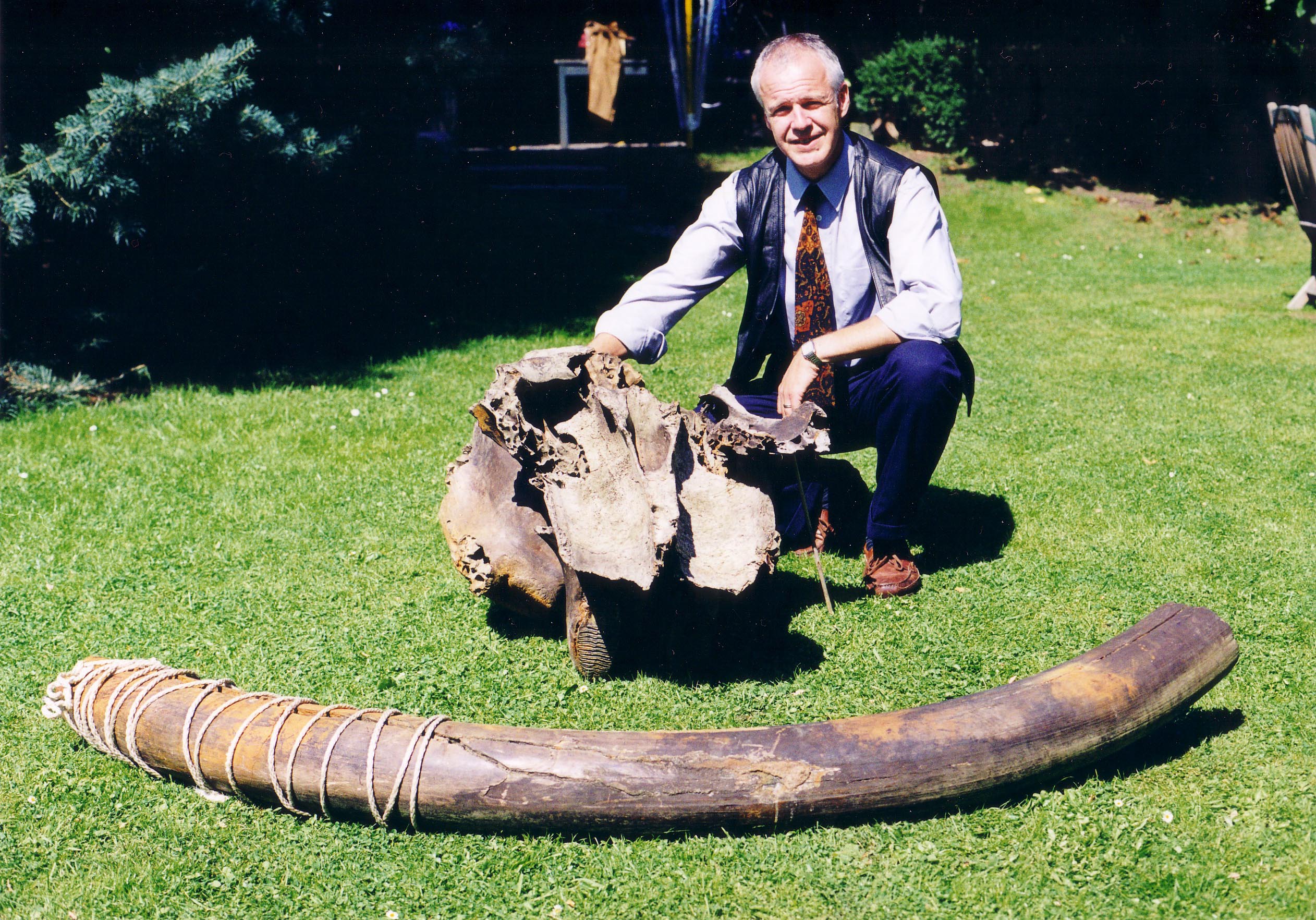
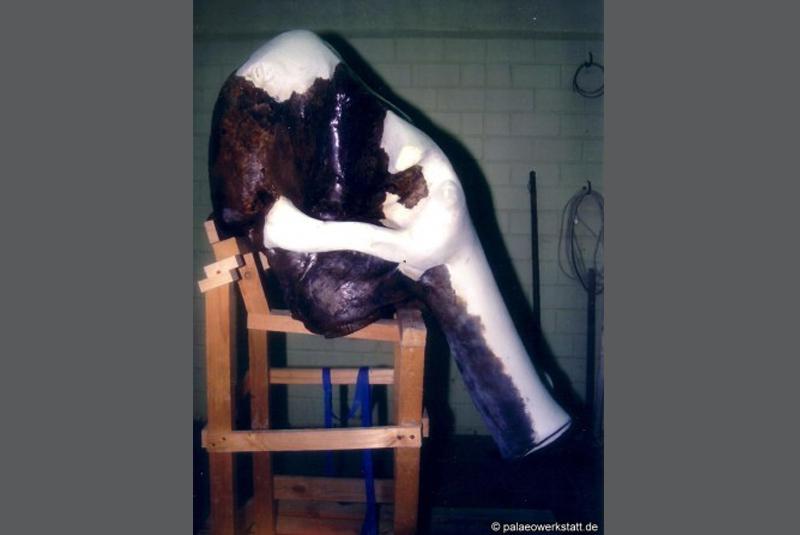
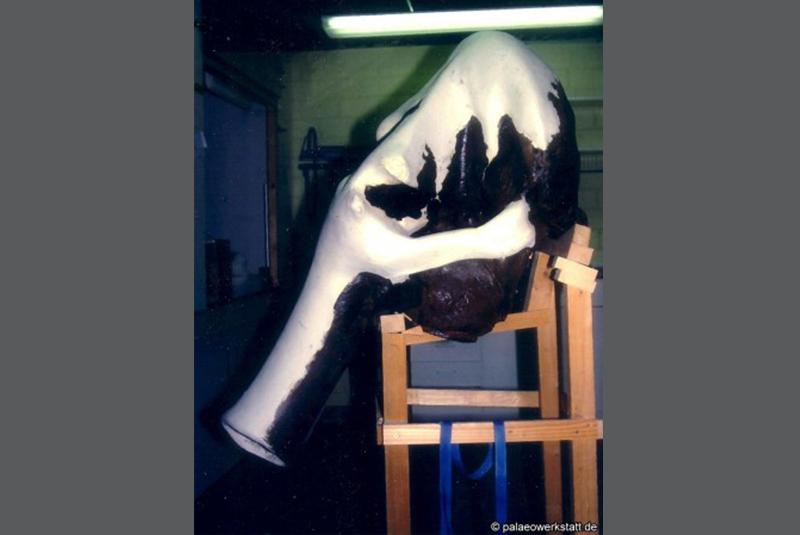
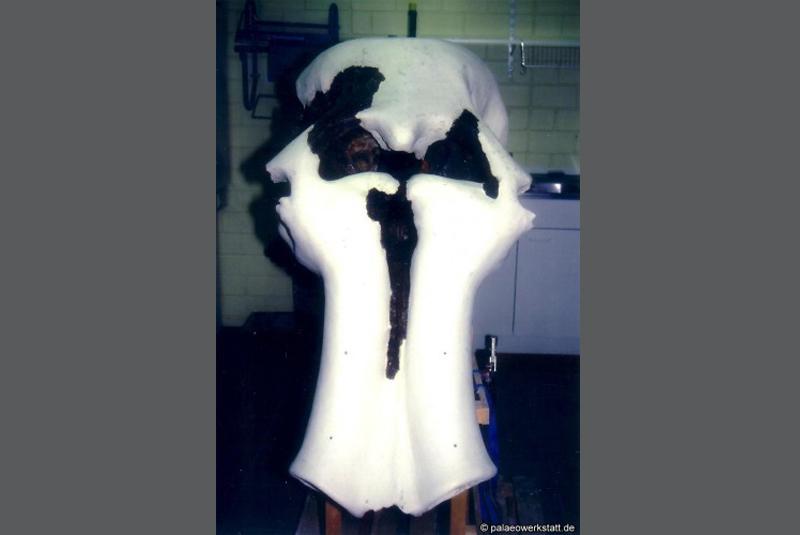
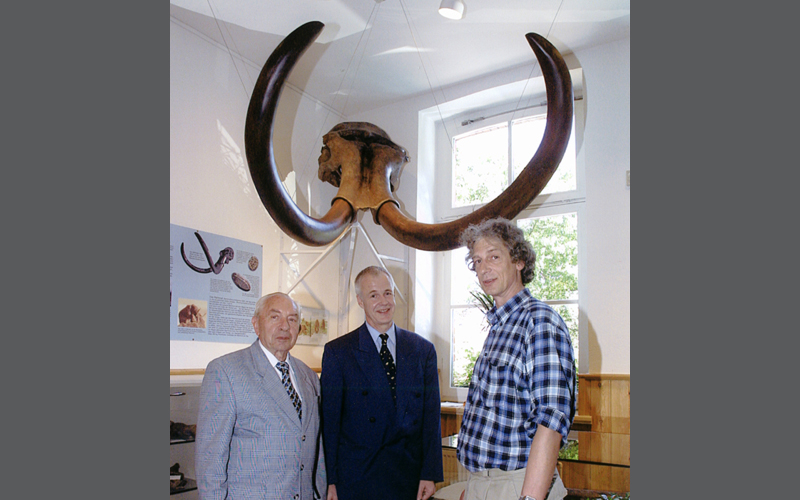
From find to impressive exhibit: conservation, preparation and reconstruction of a Mammuthus primigenius skull with tusks
The task of the PalaeoWorkshop was to prepare, preserve and complete the two finds of the fossilized tusk and skull fragment.
The following work was carried out in detail: The skull was cleaned and consolidated. Missing skull fragments (white) were reconstructed in comparison with other skulls and then reversibly fixed to the original skull with plastic.
To reduce weight, the tusks were made of fiberglass-reinforced plastic and inserted into the original skull. The missing tip was temporarily added to the original tusk and the missing right tusk was reconstructed.
It can now be admired in the Hünxe local history museum.
Fossil restoration
Climatic changes in storage, decomposing preservatives, incorrectly applied conservation methods in the past, decomposing components of the object – there are many reasons why restoration is necessary. I am happy to take a look at the damage discovered.
When should you take action?
Do you have the impression that your original has changed visually or suddenly smells conspicuous? It is better not to wait for significant damage and to remove clearly identifiable varnishes such as shellac and nitrocellulose varnish from the original beforehand.
I restore affected fossils, i.e. specifically: I stop the current decay process and ensure that the actual condition is stabilized. I will be happy to advise you on improved storage and exhibition conditions.
What causes damage to fossils that have already been treated?
I often have to deal with aging varnishes that decompose over the years and damage the original with their decomposition products. Today we know that shellac, nitrocellulose lacquers (such as Zapon lacquer) or wood glue have no place on fossils and cause lasting damage to them. Some of the varnishes chemically transform, become insoluble, brittle and put the surface under tension, causing it to crack and flake off. Adhesive joints become unstable and break. Different materials were often used together or applied on top of each other so that the surfaces of the originals are no longer recognizable.
The interaction between the individual components is a challenge. Uncontrolled climatic conditions, poor mounts and frequent vibrations can damage fossils.
Enemy pyrite decay? What is it?
Fossils that consist partly or entirely of marcasite and pyrite require special care during preparation and storage. Contact with moisture and oxygen can cause a decay process that is not immediately visible, but which can destroy fossils in a short time due to the oxidation products formed.
The decay of sulfidised fossils, especially in clayey, bituminous or calcareous matrices, is a general problem in paleontological collections.
What is the problem with pyrite decay?
Extract from the journal “Der Präparator”
Barlage M., Lobbe R.: “Konservierung sulfidisierter Fossilien – zwei
Methoden im Vergleich”, Der Präparator (52), p.84, Bremen 2006.
“Pyrite is chemically stable. As a rule, the chemically unstable marcasite is also present in the pyritised fossil. Chemically, both minerals are identical. The difference lies in their crystal structure.
When marcasite decomposes, sulfurous acid and various sulfates are formed. Iron sulfate can react at a relative humidity of 60 % to form melanterite, seven times the hydrate of iron sulfate, and thus achieve a volume expansion of over 250 %!
Sulfurous acid is hygroscopic and is also hydrolyzed by air humidity. Particularly in the almost constant presence of clay minerals, aluminum sulfates are formed in addition to iron sulfates,
which are also hygroscopic and react further when humidity is absorbed.
An autocatalytic reaction starts, which attacks not only the remaining marcasite but also the chemically stable pyrite. For some particularly susceptible fossils, a relative humidity of 30 % is sufficient for this. For comparison, it should be noted that a normal relative room humidity is between 40 % and 50 %. In calcitic fossils, the sulfurous acid reacts not only with the pyrite but also with the calcite and forms gypsum. This means that not only the aluminum and iron sulfates, but also the large-volume gypsum can be involved in the explosion of the fossil.”
What can I do immediately to prevent further damage from pyrite decay?
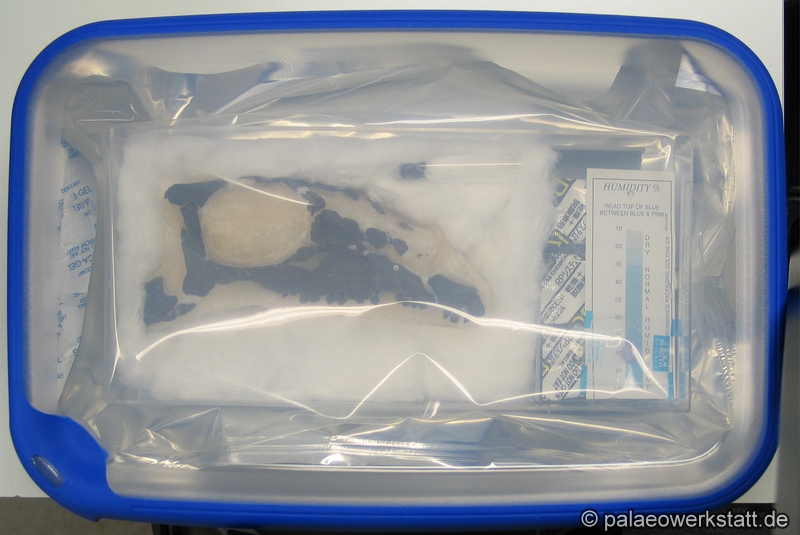
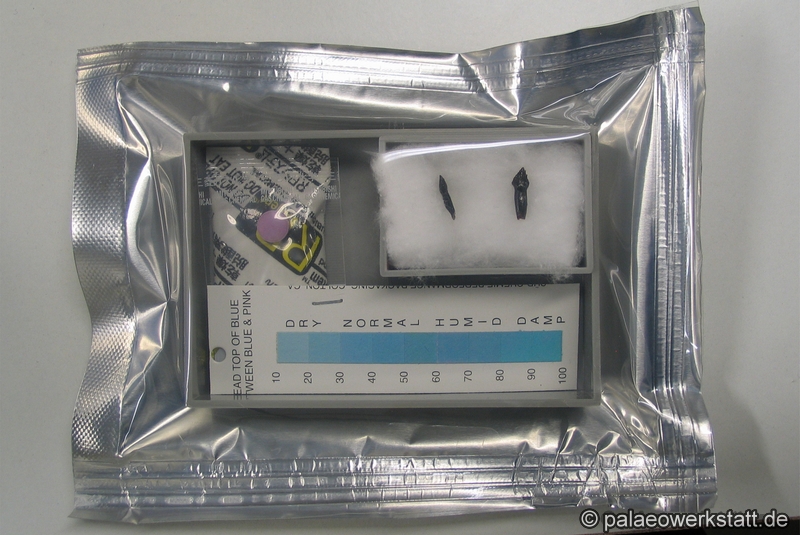
If you suspect that pyrite is decomposing on your object and original material is being destroyed, you should protect the object from moisture or oxygen if possible. The easiest way to do this is to place the object in an airtight bag or container and add a desiccant such as silica gel if necessary. Remove as much moisture as possible from the environment. Then contact me for further steps.
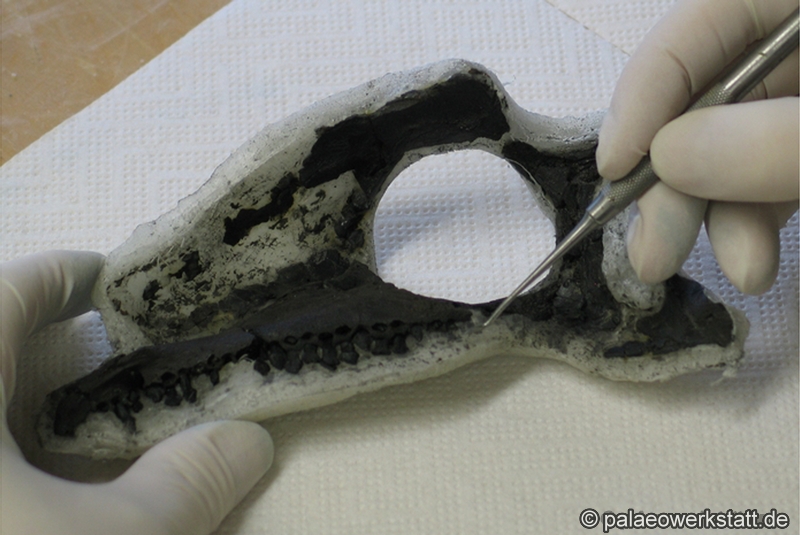
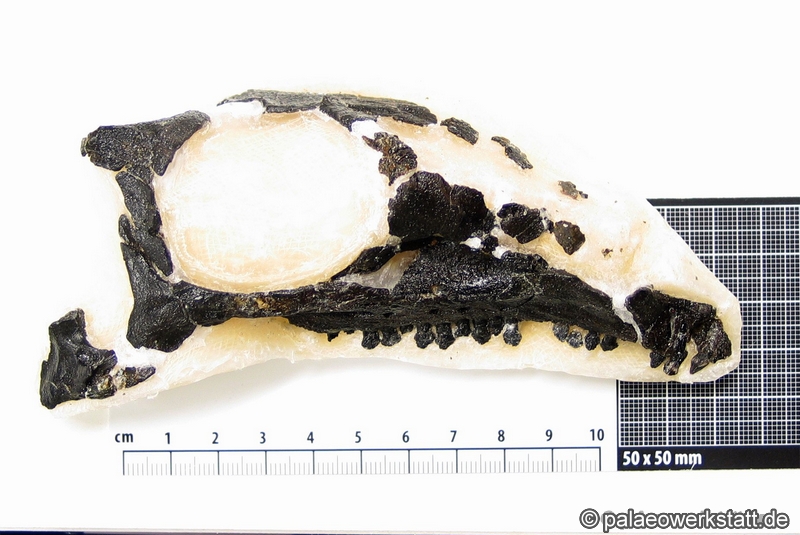
Northern Germany’s only dinosaur Emausaurus ernsti from the clay pit near Grimmen showed clear damage from pyritic decay.
My task was to stop the oxidation, stabilize the bones and plan future climate-controlled storage that would allow regular, simple monitoring.
The stable bones were treated with reducing agents and more sensitive skeletal parts were fumigated with ammonia. Finally, the bones are stored individually in climate-controlled containers.