


Cystiphyllum sp.
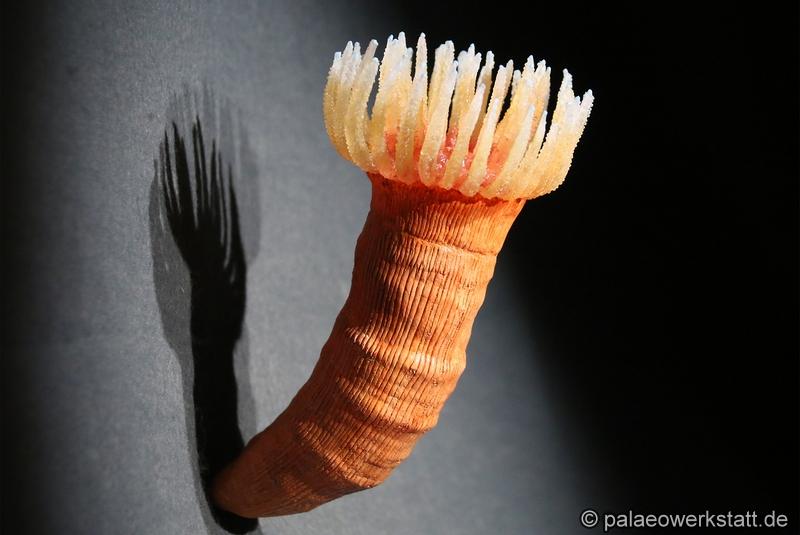
Description of the model:
Reconstructed by Susanne Klein.
It was casted using high quality epoxy resin, coloured as well with florescent colours
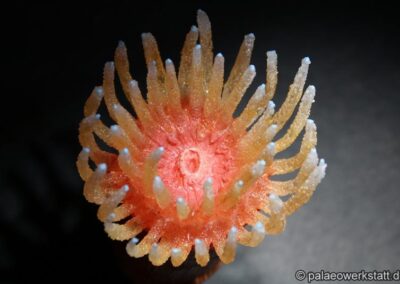
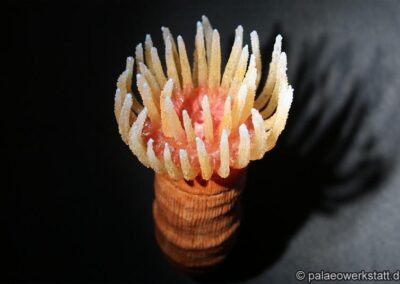
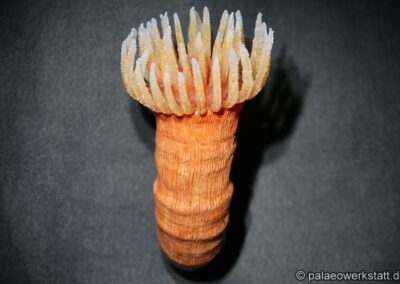
The tentacles are transparent and their tips are coloured with florscent colour. The colour looks different during daylight and (ultraviolet) black light. This florescent effect of the colour shows a natural appearance of some recent corals, which offers special effects in your exhibition. Who knows, if prehistoric corals weren’t as spectacular as today’s corals even by night. The skeleton can be delivered in different length. Please ask us, if you would prefer different length for different individuals.
Dimensions
polyp: 6,5 cm diameter
skeleton: max. diameter 3.5 cm
max. length: 14 cm
Price
282,00 €
Our prices are quoted net and do not include packaging and freight.
Please respect our Conditions of delivery and payment.
Inquire about this model:
Model views Cystiphyllum sp.
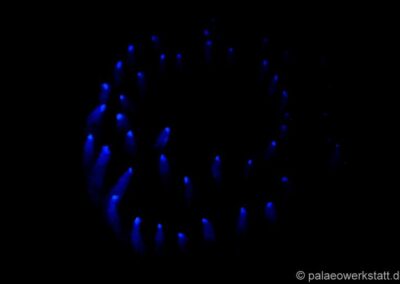
Cystiphyllum sp. - Life-size reconstruction
by black-light
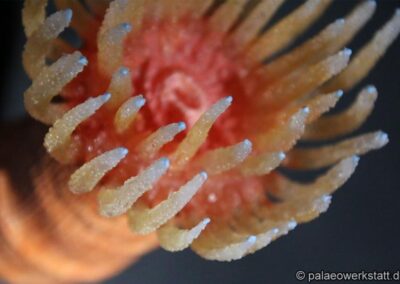
Cystiphyllum sp. -
life-size reconstruction of an extinct solitary coral
Close-up of mouth and the tentacles with reflecting tips, which flourescent colour reflects by black light.
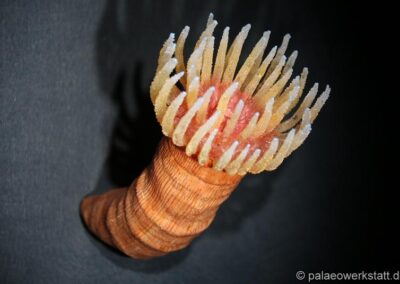
Cystiphyllum sp. -
life-size reconstruction of an extinct solitary coral
Cystiphyllum sp. -
life-size reconstruction of an extinct solitary coral
Watch the tentacles with reflecting tips, by daylight...
Cystiphyllum sp. -
life-size reconstruction of an extinct solitary coral
View of the polyp.
Cystiphyllum sp. -
life-size reconstruction of an extinct solitary coral
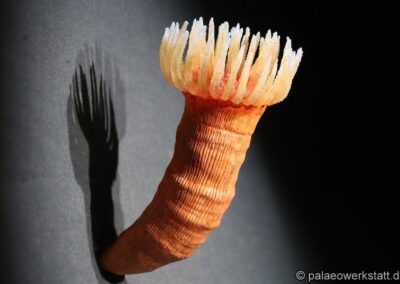
Front view
Cystiphyllum sp. -
life-size reconstruction of an extinct solitary coral
Profile Cystiphyllum sp.
Geological era
Silur – Middle Devonian
Further Informations
Further information
Cystiphyllum, extinct genus of solitary corals found as fossils in Silurian and Devonian marine rocks (the Silurian Period preceded the Devonian Period and ended 416 million years ago). Cystiphyllum was one of the horn corals, so named for their hornlike shape. Like other corals, it had specialized requirements, and thus its fossils are important environmental indicators.