


Limax maximus
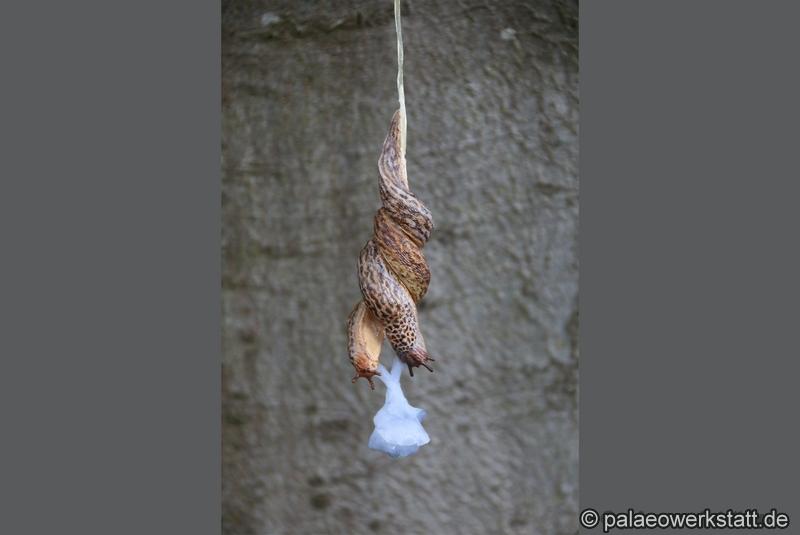
Description of the model:
The model is made of high quality epoxy resin and coloured using a non-fade paint and varnish. Modelled by Susanne Klein.
Dimensions
length of the mating slugs incl. mating organs: 15.2 cm
max width: 3.5 cm
total length of the model: 60 cm
Price
225,00 €
Price of the Mating on demand
Our prices are quoted net and do not include packaging and freight.
Please respect our Conditions of delivery and payment.
Inquire about this model:
Model views Limax maximus
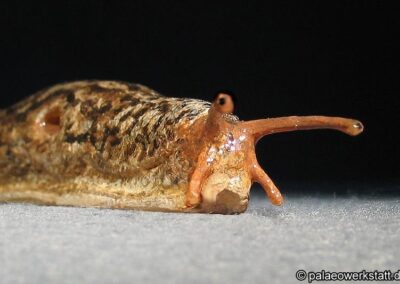
Limax maximus - Leopard Slug
close-up of the life-size model
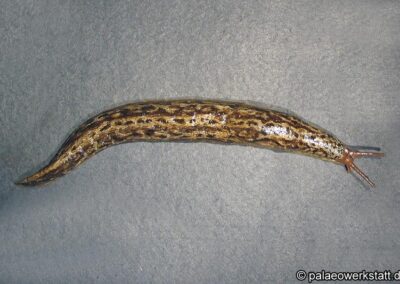
Limax maximus - Leopard Slug
overhead view of the life-size model
-400x284.jpg)
Limax maximus - Leopard Slug
R.H. side view of the life-size model
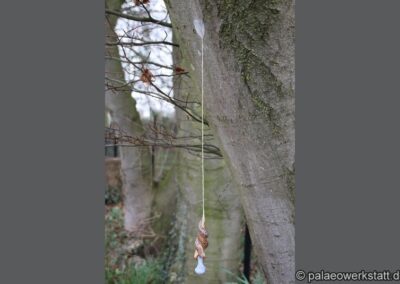
Limax maximus - Leopard Slug
Example of the life-size model mounted onto a tree
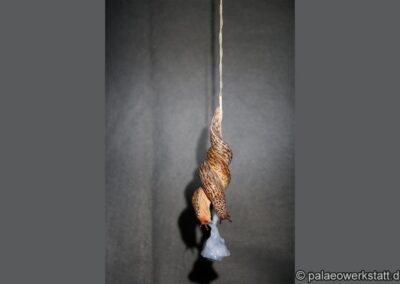
Limax maximus - Leopard Slug
Mating pair on a mucus thread. Life-size model
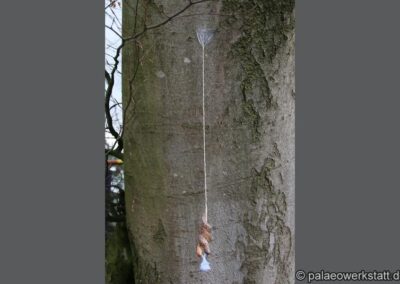
Limax maximus - Leopard Slug
Mating in a natural surrounding, Life-size model
-400x284.jpg)
Limax maximus - Leopard Slug
L.H. side view of the life-size model
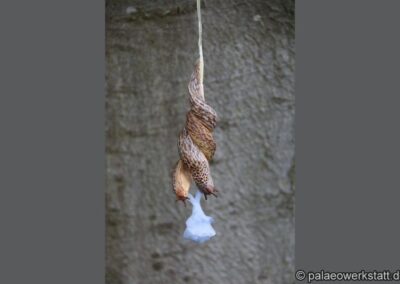
Limax maximus - Leopard Slug
Close-up of the mating slugs while they are hanging on a mucus thread. Life-size model.
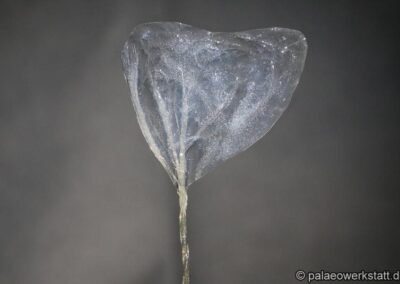
Limax maximus - Leopard Slug
Close-up of the mucus spot. The slugs climb onto a tree and revolve eachother in oder to create a mucus spot to anchor and to lower themselves on a thick string of mucus
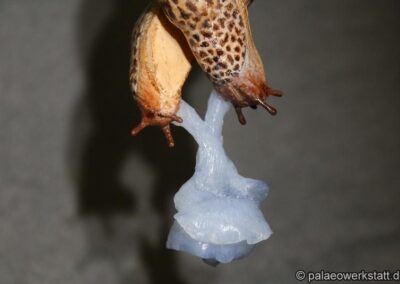
Limax maximus - Leopard Slug Life-size model
They evert their white translucent mating organs, entwine them and exchange sperm. This stage is called umbrella form.
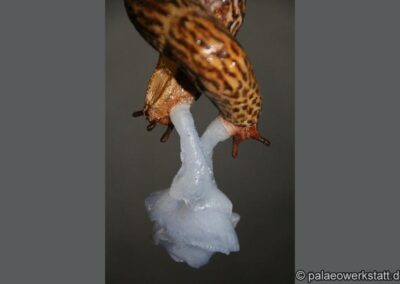
Limax maximus - Leopard Slug Life-size models.
Close-up of the matin organs.
Profile Limax maximus
Habitat
Omnivorous slug, ground-dweller. Hiding under pieces of wood, stones, in crevices etc. Copulates hanging on a slime thread attached to a plant branch. Originally probably a woodland species. Great adaptive ability, often lives in human-disturbed habitats: compost, gardens, cellars, vegetable warehouses, cemeteries, parks. May damage plant cultivations. Quite common, but never forming dense populations.
Sources
Probably native to S and W Europe, perhaps also to N Africa. Present-day distribution covers almost entirely Europe including Scandinavia and the Caucasus. Introduced to South Africa, North America, Australia, Tasmania, New Zealand.
Further Informations
The mating habits of Limax maximus are considered unusual among slugs: the hermaphrodite slugs court, usually for hours, by circling and licking each other. After this, the slugs will climb into a tree or other high area and then, entwined together, lower themselves on a thick string of mucus, evert their white translucent mating organs (penises) from their gongopores (openings on the right side of the head), entwine these organs, and exchange sperm. Both participants will later lay hundreds of eggs
Reference for the text:
Wiktor 2001 (Fauna Graeciae 8): 79.